My Undergraduate Research
The work described on this page was done at the
UCSB Hawkes Lab
,
which focuses on soft robotics and control systems. My work included experimental
testing of inflatable robots as well as simulations involving the dynamics and
control of objects in free flight.
Inflatable Arm Testing
- Tested different string-routing configurations for an inflatable arm.
- Measured the force required to displace the arm under different configurations and loads.
- Designed and 3D printed a base that allowed the arm to be securely fixed during testing.
- Built a replacement arm after the original material degraded from repeated testing.
- Investigated tubing and routing configurations to reduce friction in the string system.
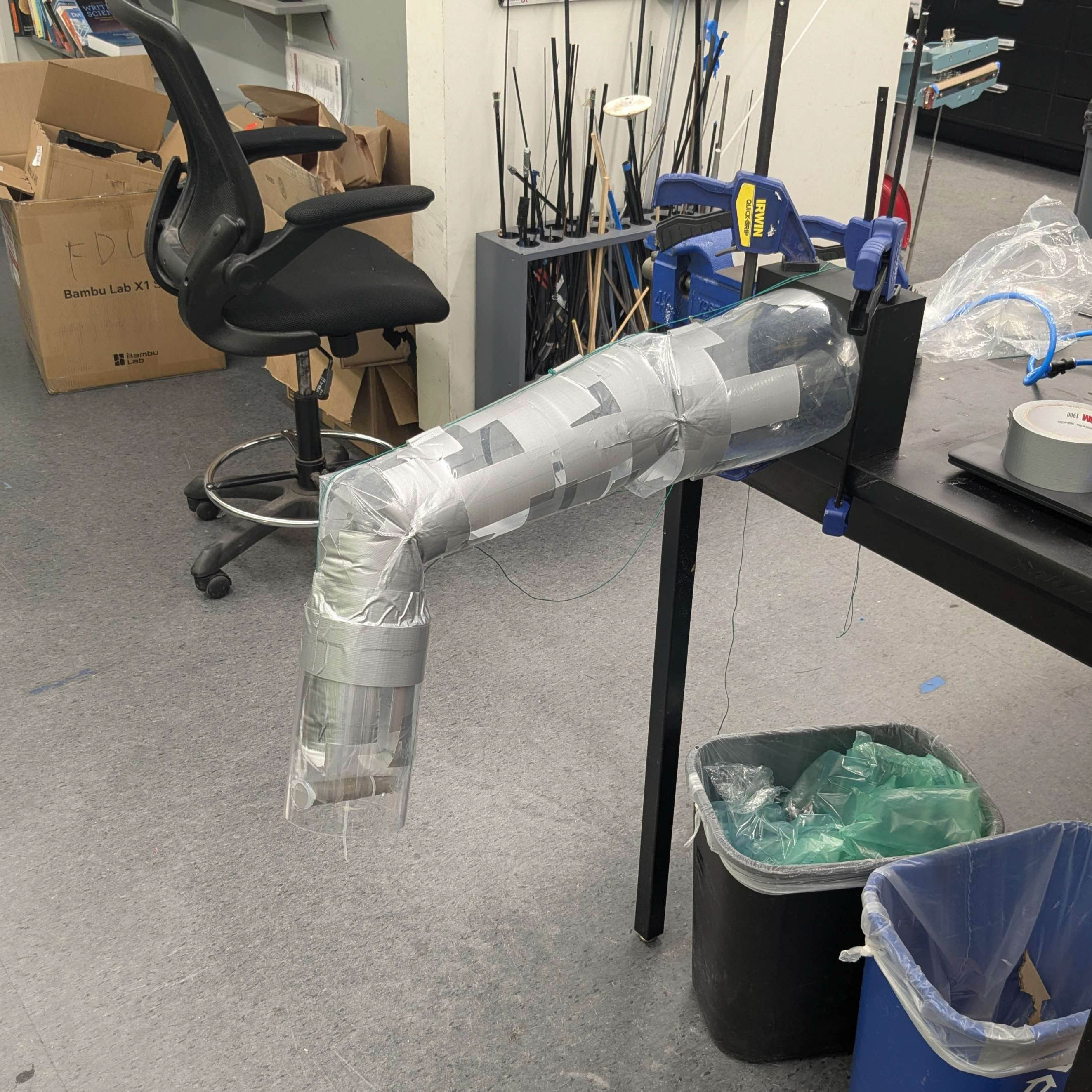 Example configuration used to test the inflatable arm. A force gauge was used
to measure the force required to displace the end of the arm with a known mass attached.
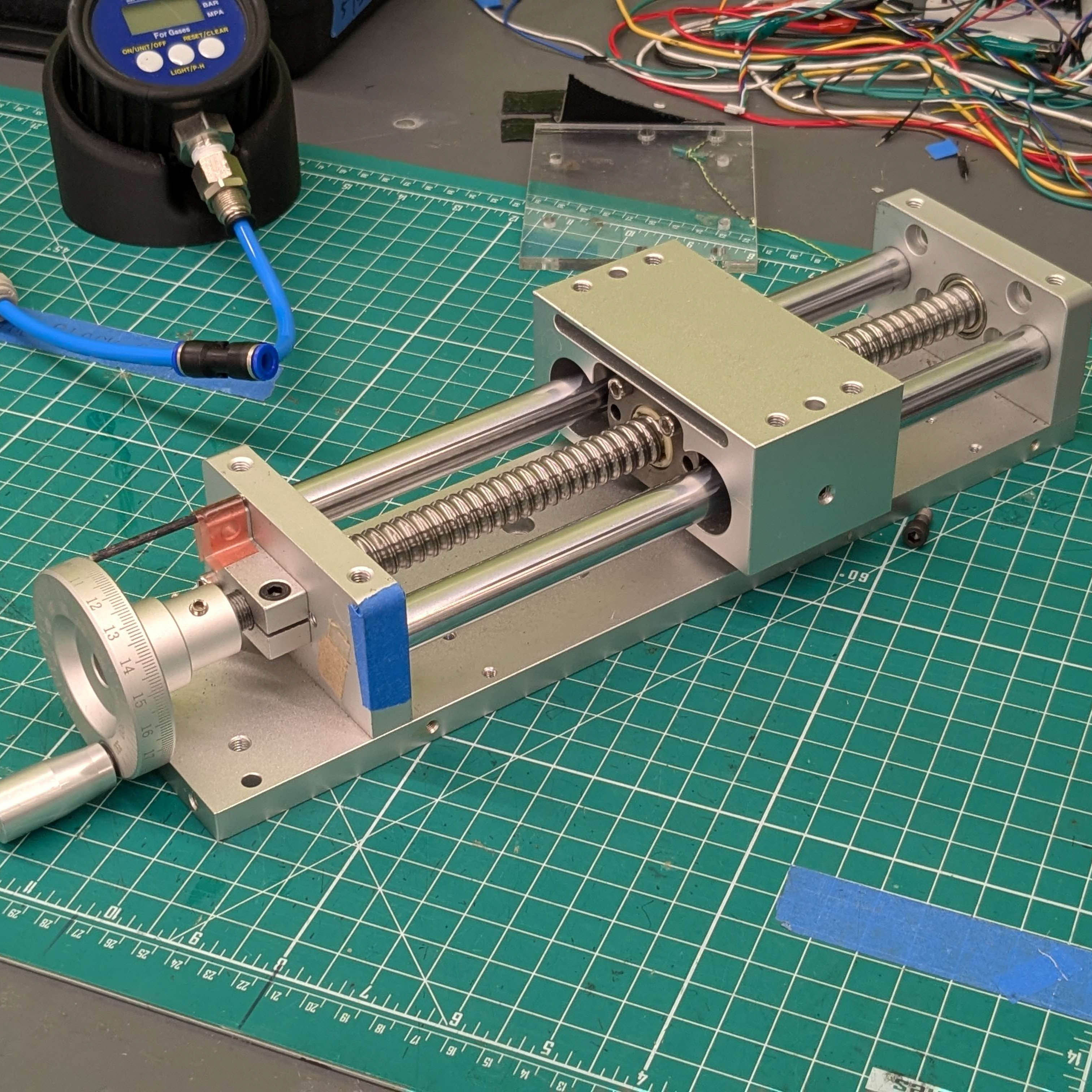 Linear rail used to control the motion of the force gauge.
Inflatable Shoe Pod Testing
- Designed an adapter for the linear rail guide of the force gauge.
- Used the adapter to compress inflatable shoe pods and collect force data.
- Measured internal pressure during testing and recorded the readings for later analysis.
- Designed the setup to make testing faster and facilitate automated data processing in MATLAB.
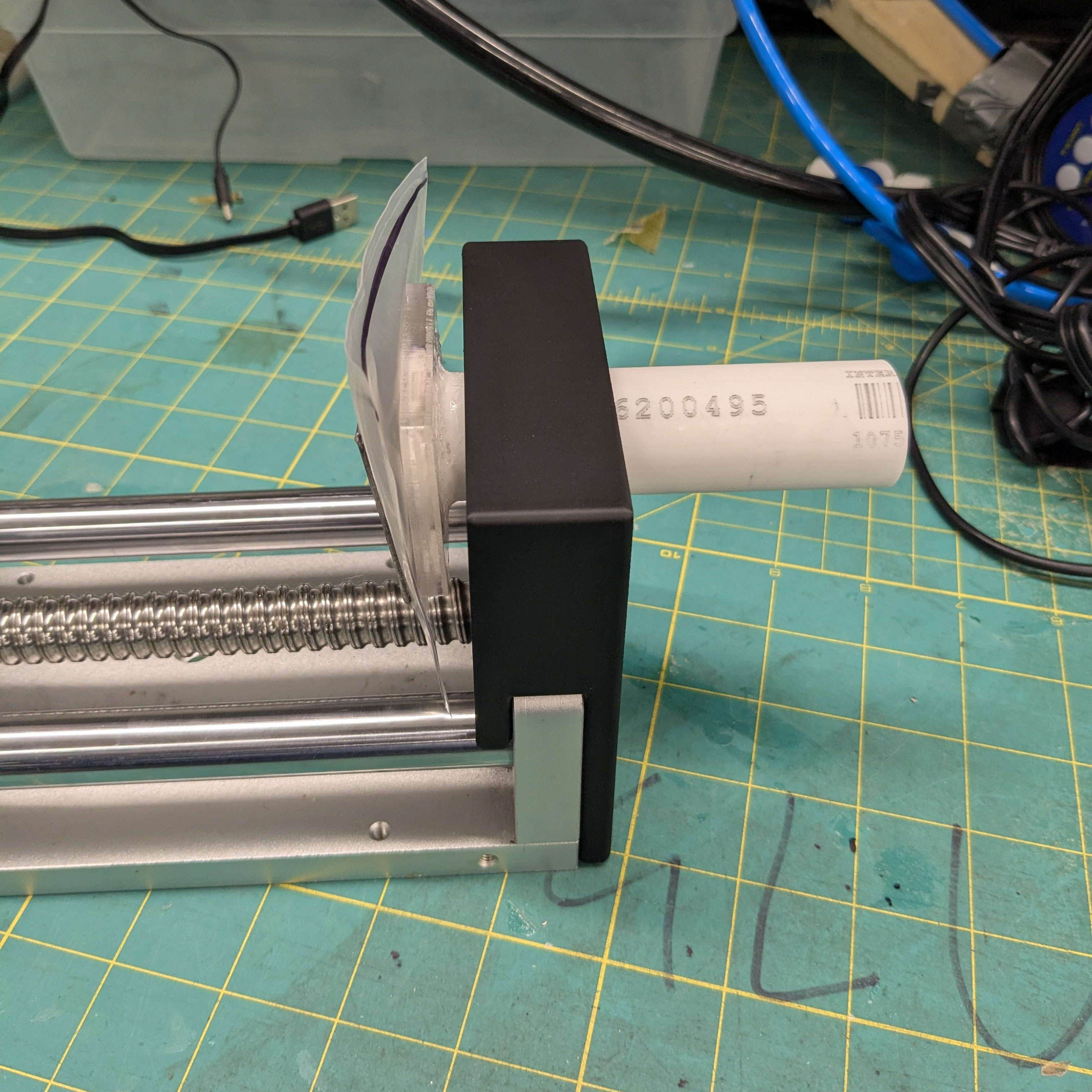 Adapter designed to mount the inflatable shoe pod testing fixture to the force gauge.
Tubular Motor Testing
- Improved the experimental setup for a tubular motor used to test sand-jumper accessories.
- Designed and fabricated a two-piece adjustable motor mount.
- Used brass inserts and set screws to secure the motor in the mount.
- Allowed the motor to be rotated continuously or positioned in 5° increments.
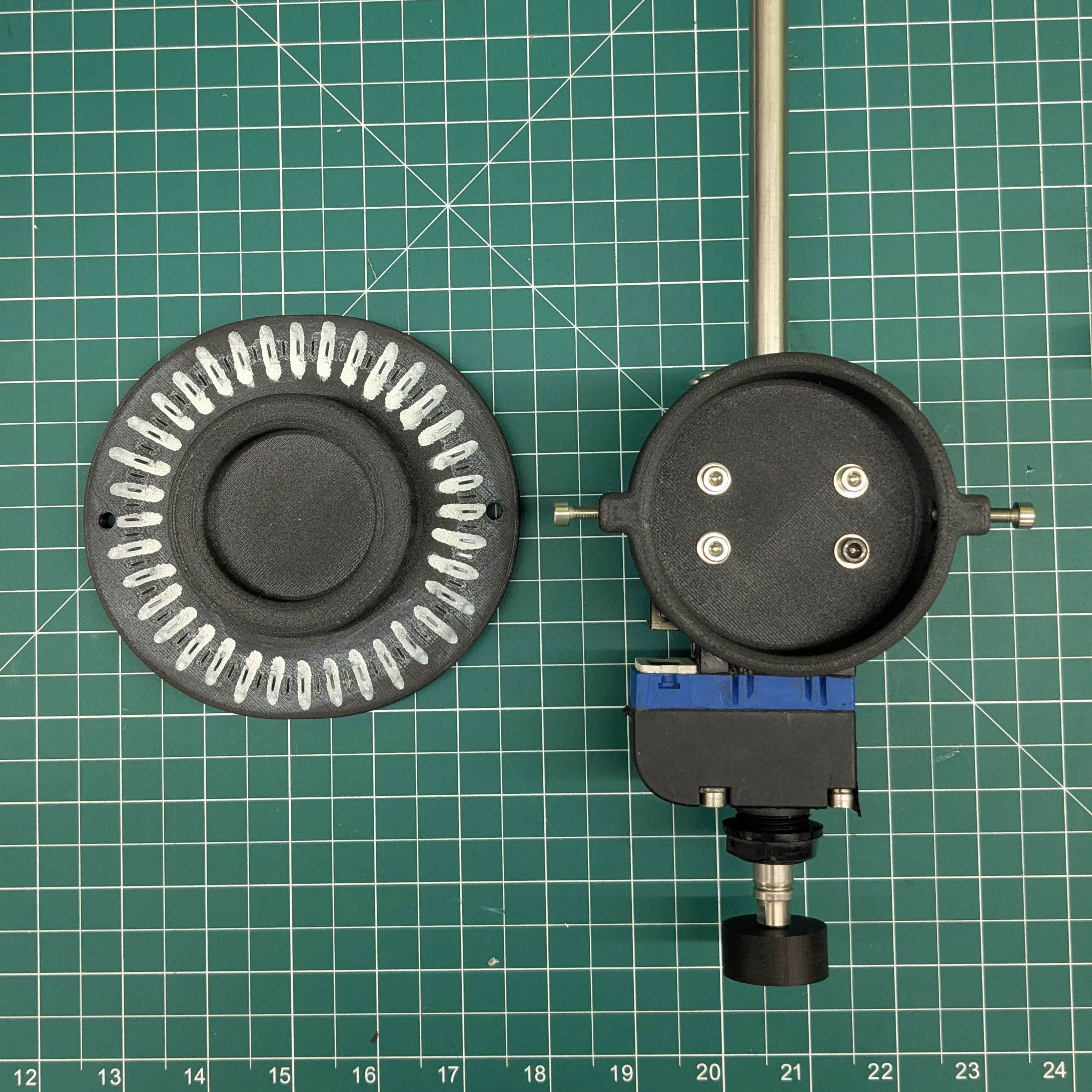 Two-piece motor mount. The two halves fit together with a loose fit and are
secured using set screws through brass inserts.
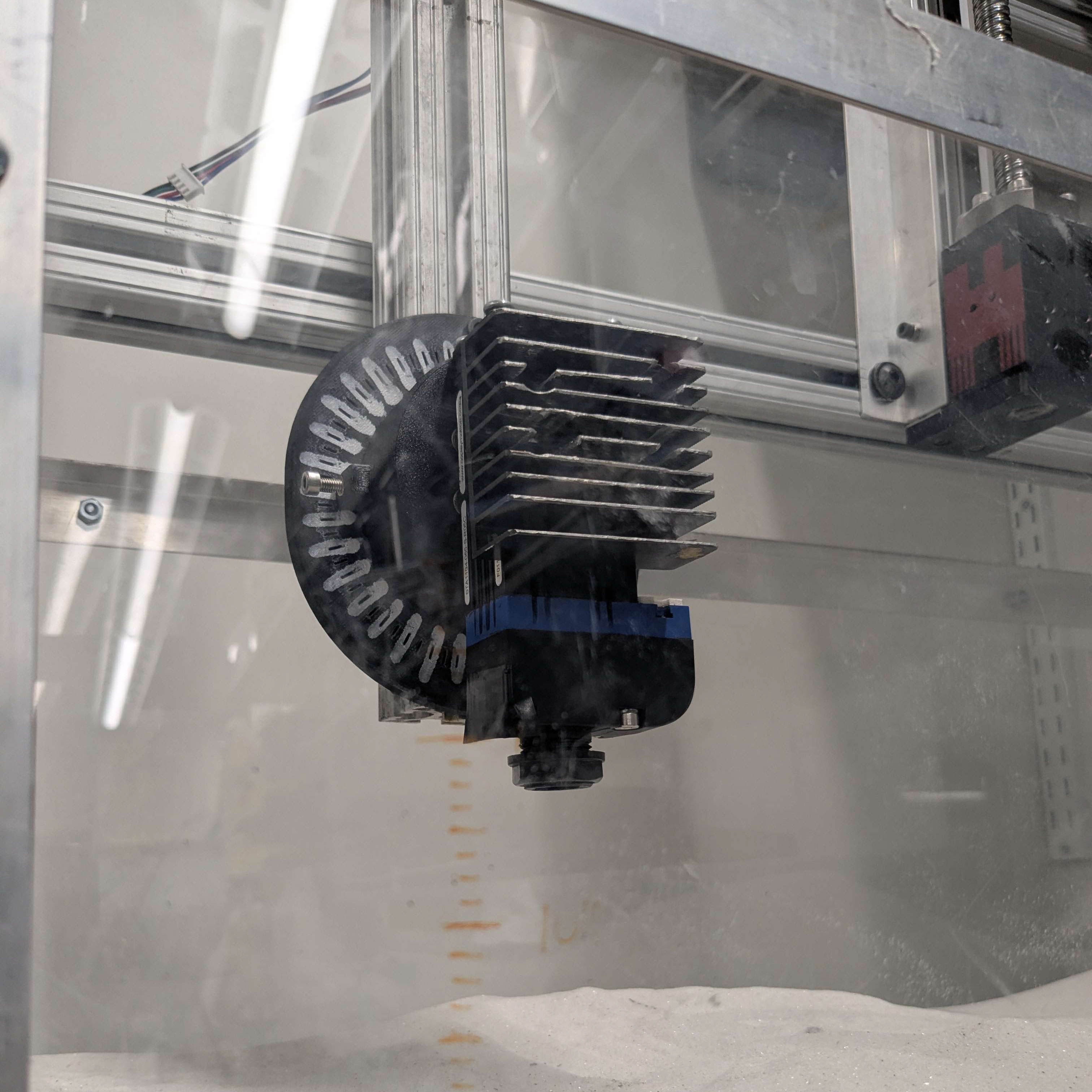 Tubular motor mounted above the sand bed for testing.
Coin Flip Simulation
I later began studying the dynamics and control of objects in ballistic flight.
This work was inspired by the
Disney Brick
and
The Probability of Heads
.
- Developed a MATLAB simulation of a rotating coin during ballistic flight.
- Investigated how initial vertical velocity and angular velocity affect the final landing orientation.
- Recreated the results from The Probability of Heads using a numerical simulation.
- Studied the relationship between initial conditions and the final orientation of the coin.
MATLAB simulation of a rotating coin in ballistic flight. The simulation
shows the coin's motion from launch until it reaches the ground.
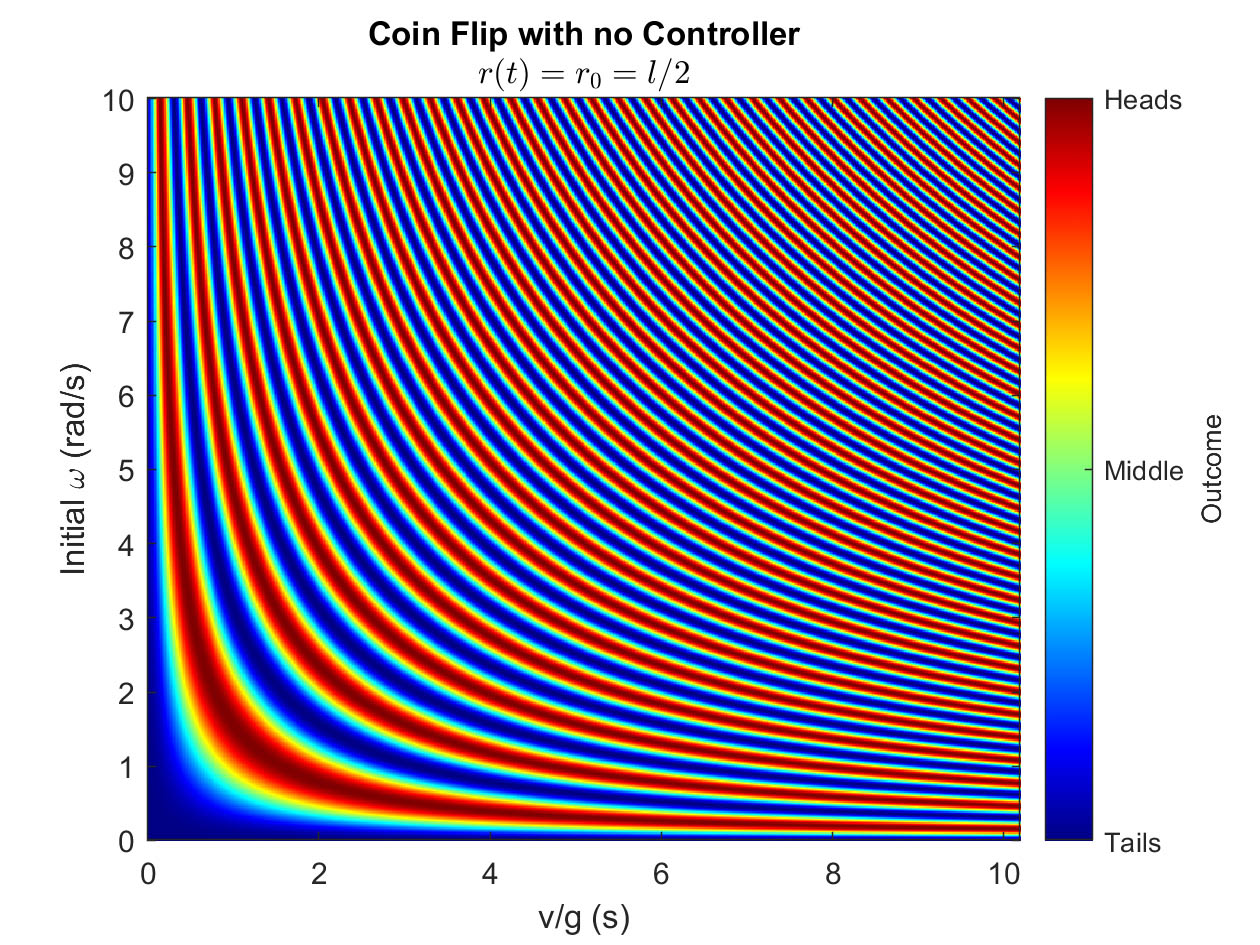 Reproduction of the figure from The Probability of Heads, showing how
different initial vertical and rotational velocities affect the final result
of a coin flip. The added color mapping represents the final orientation of
the simulated coin.
Controlled Coin with Bang-Bang Controller
The next stage was to investigate whether the final orientation of the coin could
be actively controlled during free flight. I added two movable masses to the coin
and developed a controller that changes the coin's rotational speed by extending
the masses. This approach is based on conservation of angular momentum and the
same principle that allows gymnasts and figure skaters to change their rotational
speed by moving their arms or legs.
- Added two movable masses to the coin to control its moment of inertia.
- Used conservation of angular momentum to change the coin's rotational velocity.
- Developed a bang-bang controller that extends the masses to slow the coin's rotation.
- Used the predicted landing angle to determine when the masses should be extended.
- Tested the controller across different initial rotational and vertical velocities.
- Demonstrated that the controller could make the coin land on the desired side for most initial conditions.
- Investigated the limitations of the controller at low initial rotational and vertical velocities.
Simulation of the controlled coin. The controller predicts the final landing
angle and extends the two masses to change the coin's rotational speed before impact.
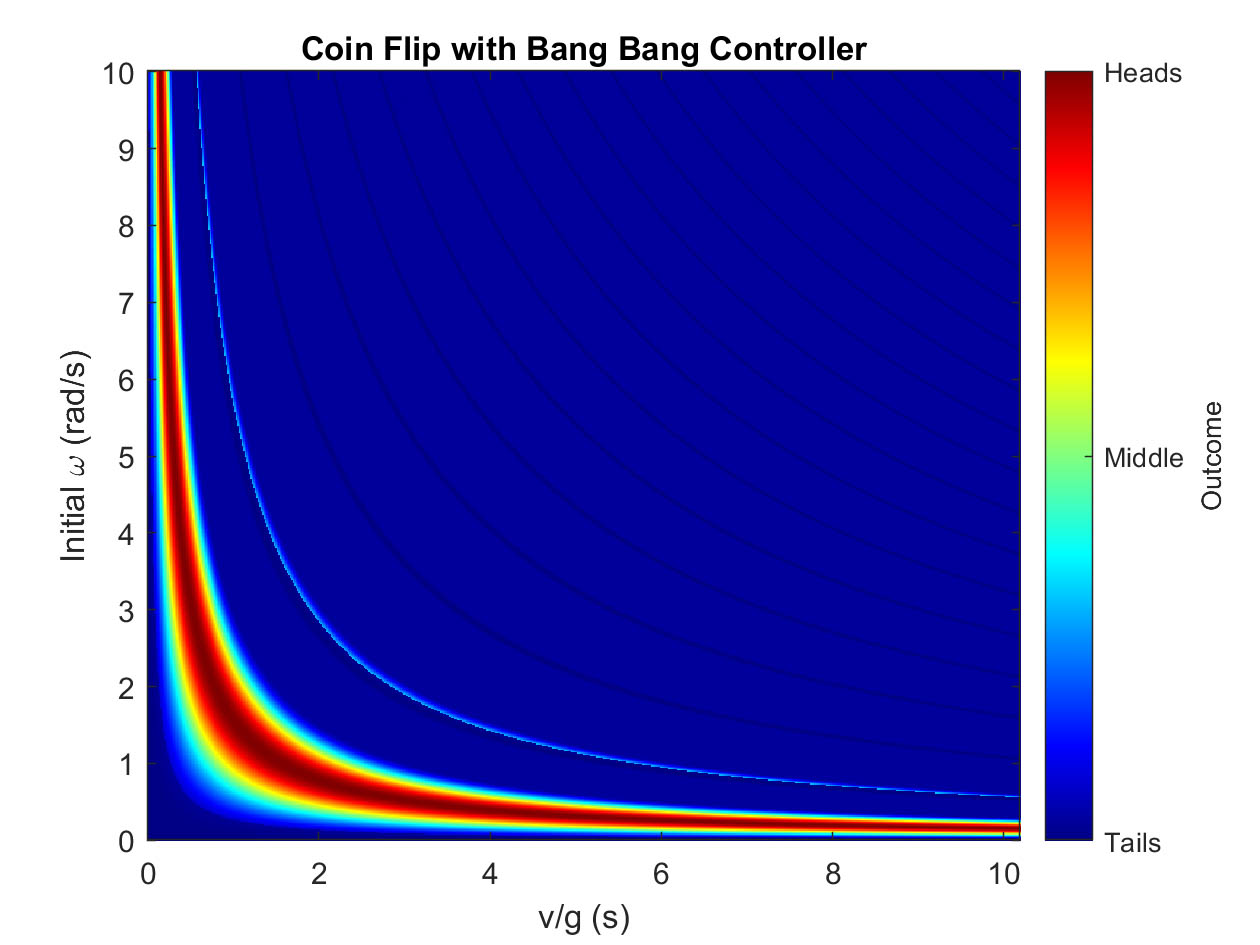 Results from the bang-bang controller. The controller was able to control the
landing side for most initial conditions, but was unable to reliably change the
outcome when both the initial rotational and vertical velocities were low.
Controlled Coin with Reaction Ring
The next stage of the project was to investigate whether the final orientation
of the coin could be actively controlled during flight. I added a rotating ring
around the coin and used its angular momentum to influence the coin's rotation.
- Added a controllable rotating ring to the coin simulation.
- Used conservation of angular momentum to change the coin's rotational velocity.
- Developed a controller that modifies the ring's angular velocity after the coin reaches its apex.
- Used the predicted landing orientation to determine the desired control response.
- Tested the controller across a large range of initial conditions.
- Simulated 40,000 combinations of initial vertical velocity and angular velocity.
- Investigated how the coin's radius affects the controllability and outcome of the system.
- Analyzed the change in kinetic energy during controlled flips.
Simulation of the coin with a controllable rotating ring. The ring changes
the coin's angular velocity during flight to influence its final orientation.
 Simulation results across 40,000 combinations of initial vertical velocity
and angular velocity. The plot shows the resulting landing orientation of
the controlled coin.
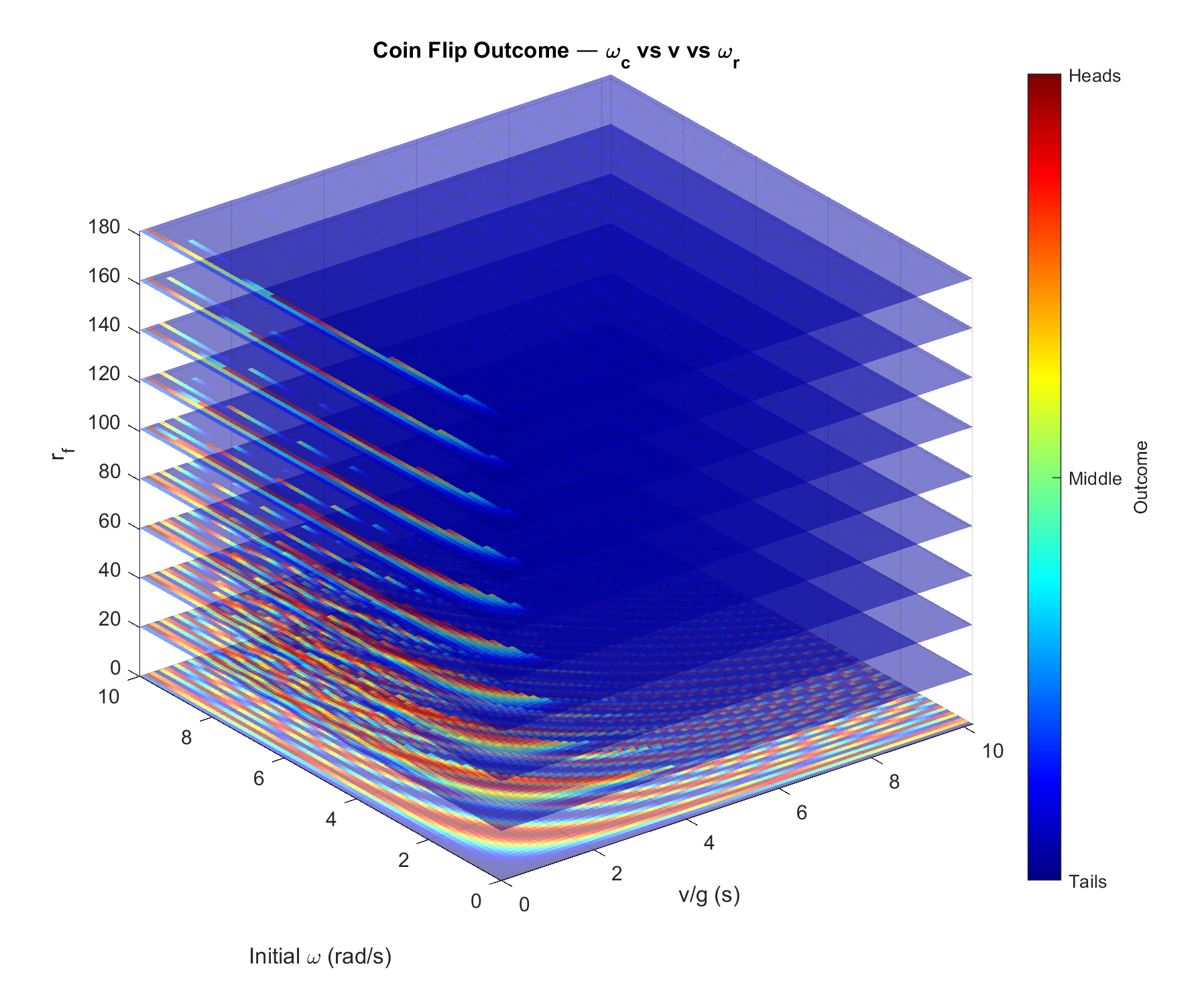 Sliced 3D plot showing the effect of the coin's radius on the final outcome.
Initial vertical velocity and angular velocity are shown on the horizontal
axes, while the coin radius is varied along the third axis.
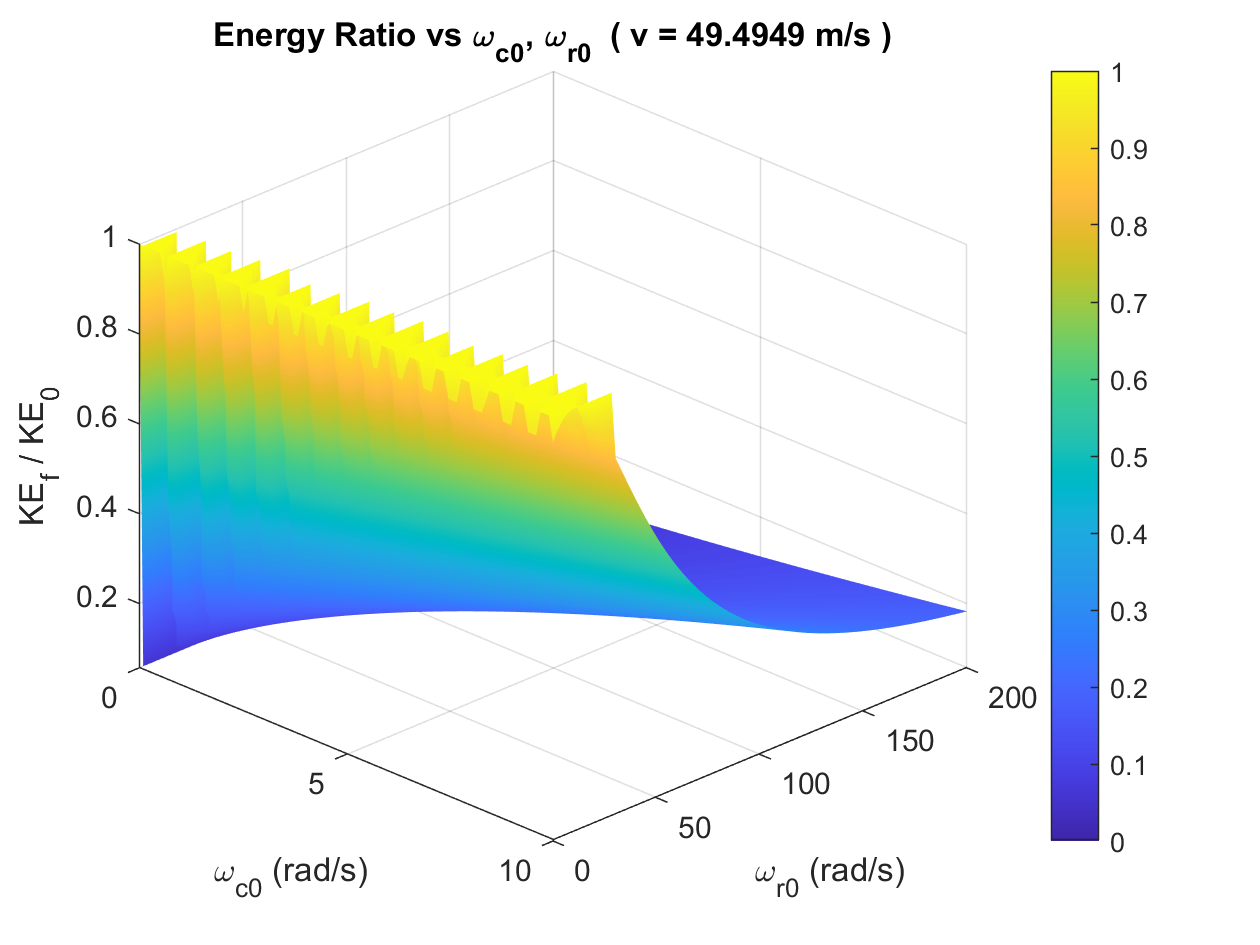 3D plot showing the ratio of final kinetic energy to initial kinetic energy
for the controlled coin across different initial conditions.
Reaction-Wheel Cube
The next step was to extend the controlled coin problem into three dimensions.
I developed a MATLAB simulation of a cube equipped with three reaction wheels.
The objective was to control the cube's attitude during free flight and land
on a desired face.
- Developed a 3D rigid-body simulation of a cube in ballistic flight.
- Modeled three reaction wheels for controlling the cube's attitude.
- Used quaternions to represent and integrate the cube's 3D orientation.
- Developed a PD attitude controller based on quaternion orientation error.
- Controlled the cube's orientation while it was in free flight.
- Tested different initial angular displacements and angular velocities.
- Demonstrated controlled landings on a desired face across different initial conditions.
3D MATLAB simulation of the reaction-wheel-controlled cube. The controller
changes the cube's attitude during free flight so that it lands on the desired face.
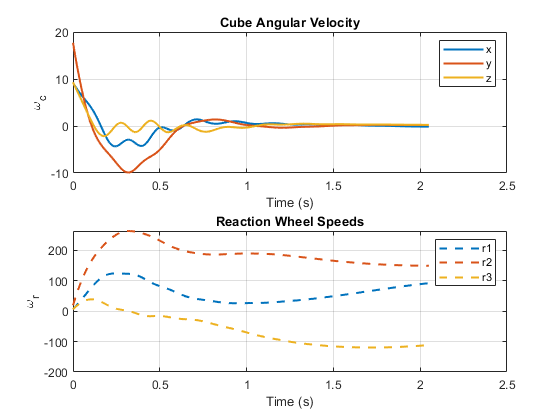 Cube attitude and angular velocity throughout the controlled flight.
The time histories show how the controller changes the cube's orientation
and angular velocity before landing.