FSAE Steering Wheel
Background
I led this group project, where my group and I received a $2100 grant to test a composite sandwich material for an FSAE race car seat. To achieve a lightweight and
strong product, expanding foam was used for the core of the material, and resin infused fiberglass was used for the shell. We aimed for 2 types of tests, bending and shear stress, with three
categories of number of layers of fiberglass on each side of the foam core. We conducted the bending tests with Kirk Fields, P.E., with a two point load in an MTS load frame to maximize the area where failure could occur.
My main contributions were writing a Standard Operating Procedure for working with fiberglass, resin, and vacuum bagging, and making the test samples. We used vacuum bagging
to make the samples because of the even distribution of resin in the fiberglass it would yield. Writing the SOP taught me how to write documentation with integrated feedback, and making the samples
taught me how to manufacture with vacuum bagging.
Below are some pictures from over the course of the project.
Image Gallery
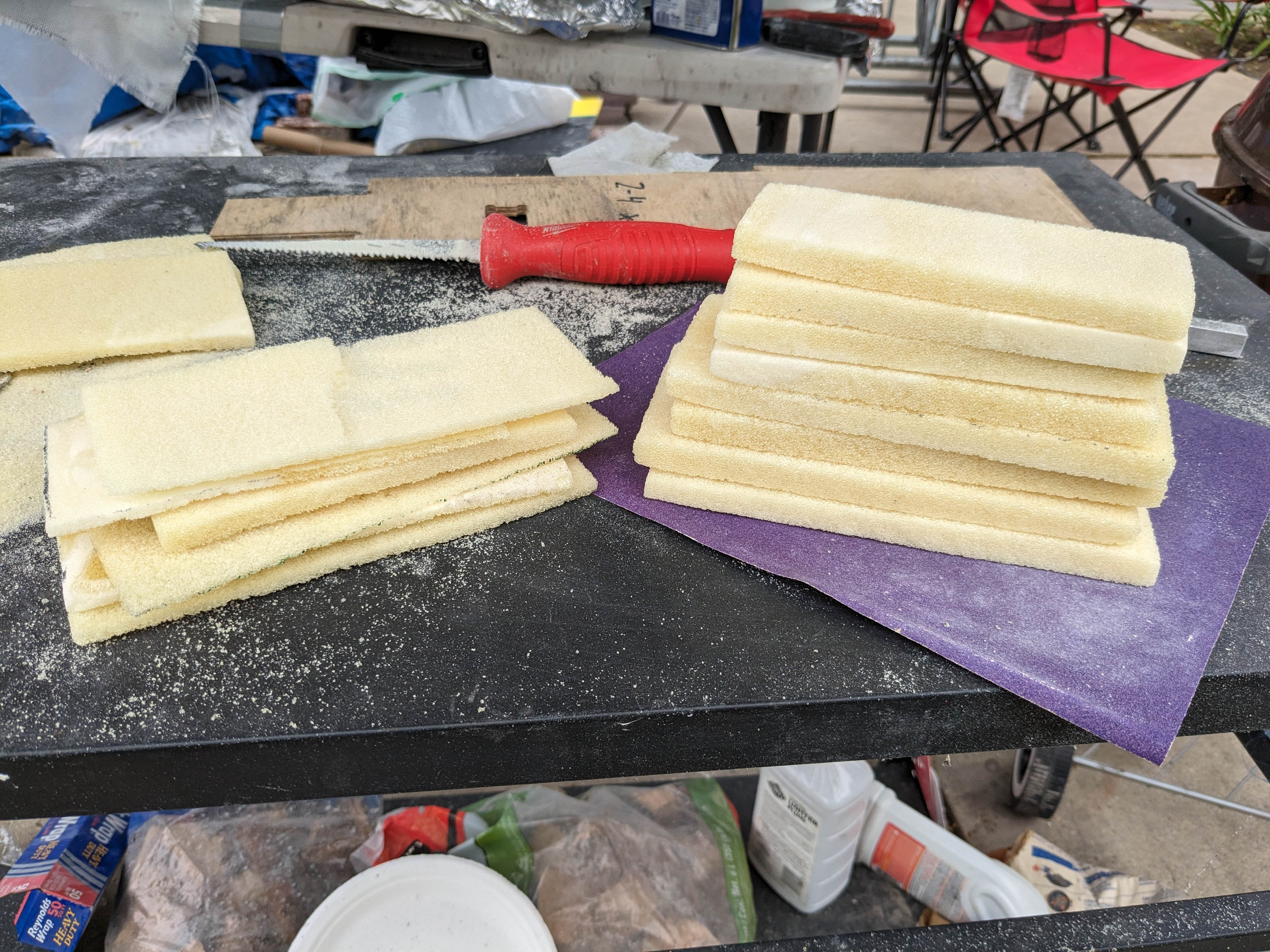 The foam blocks for the samples were shaped from expanding foam.
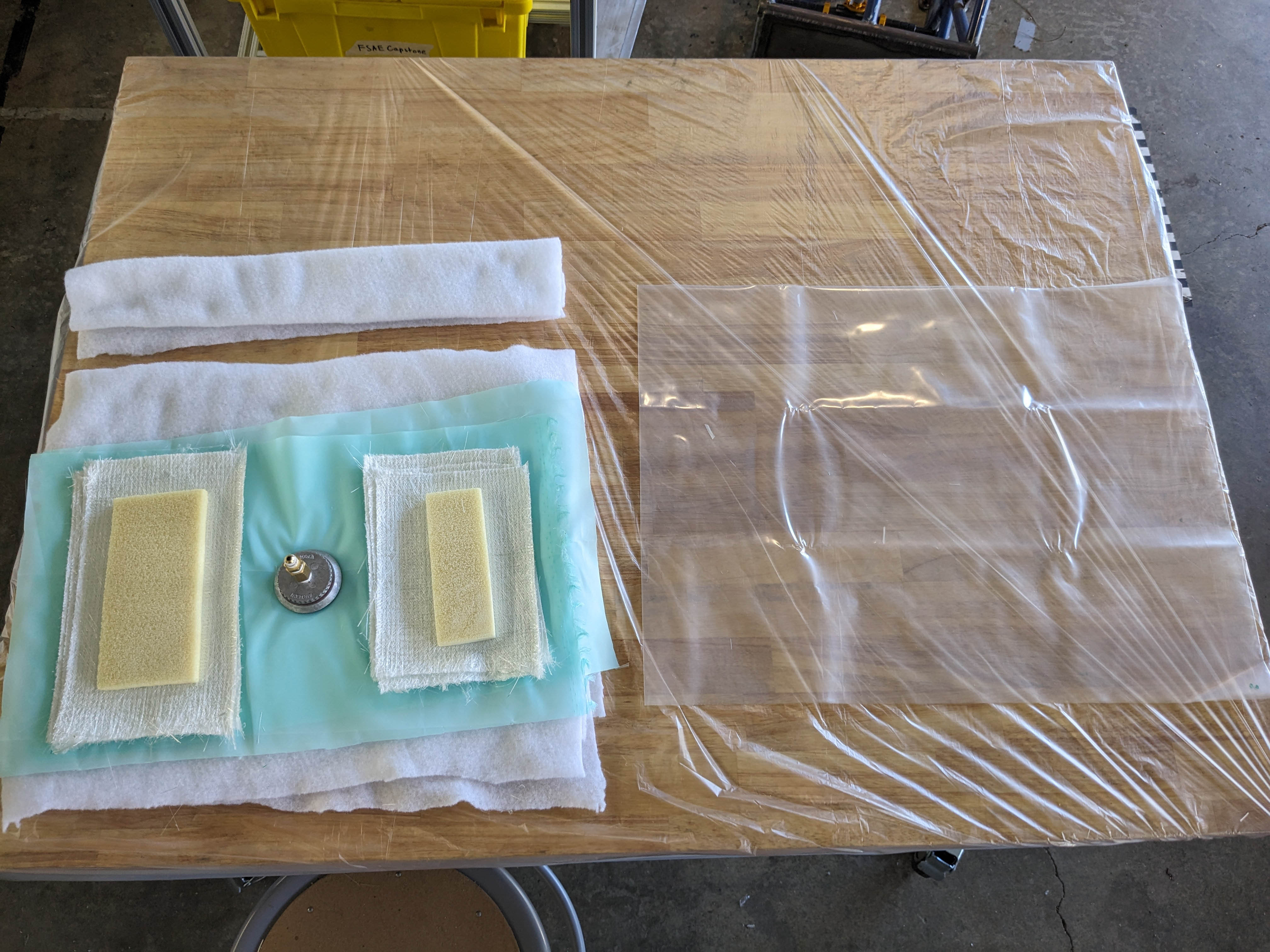 These are some of the materials that were needed for vacuum bagging: foam blocks, fiberglass, release film, breather cloth, vacuum connector, and bagging film.
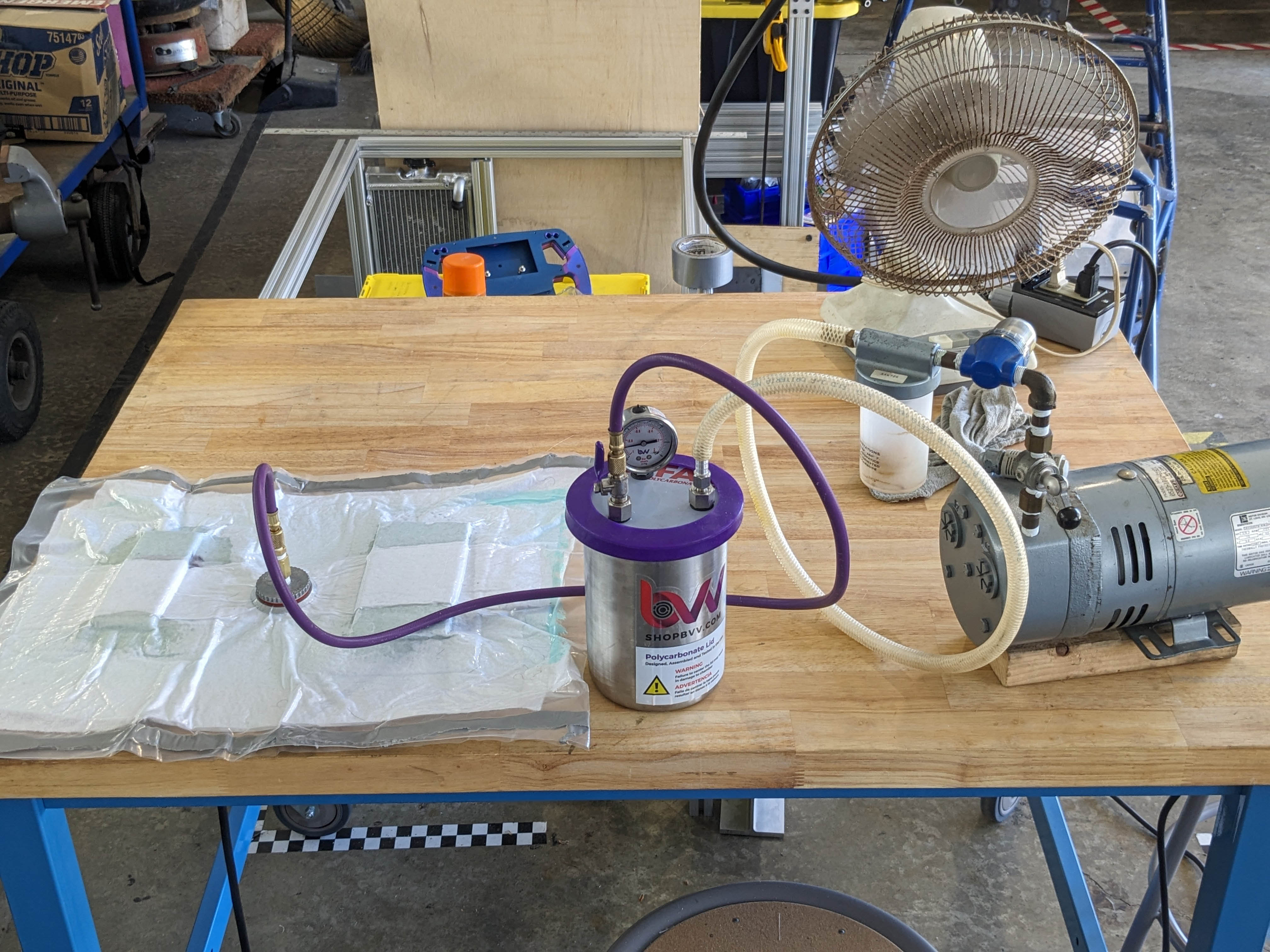 This was the setup for vacuum bagging while the resin was curing. Between the bag with the uncured resin and the vacuum pump is a resin trap catch which prevents resin
from getting into the vacuum pump.
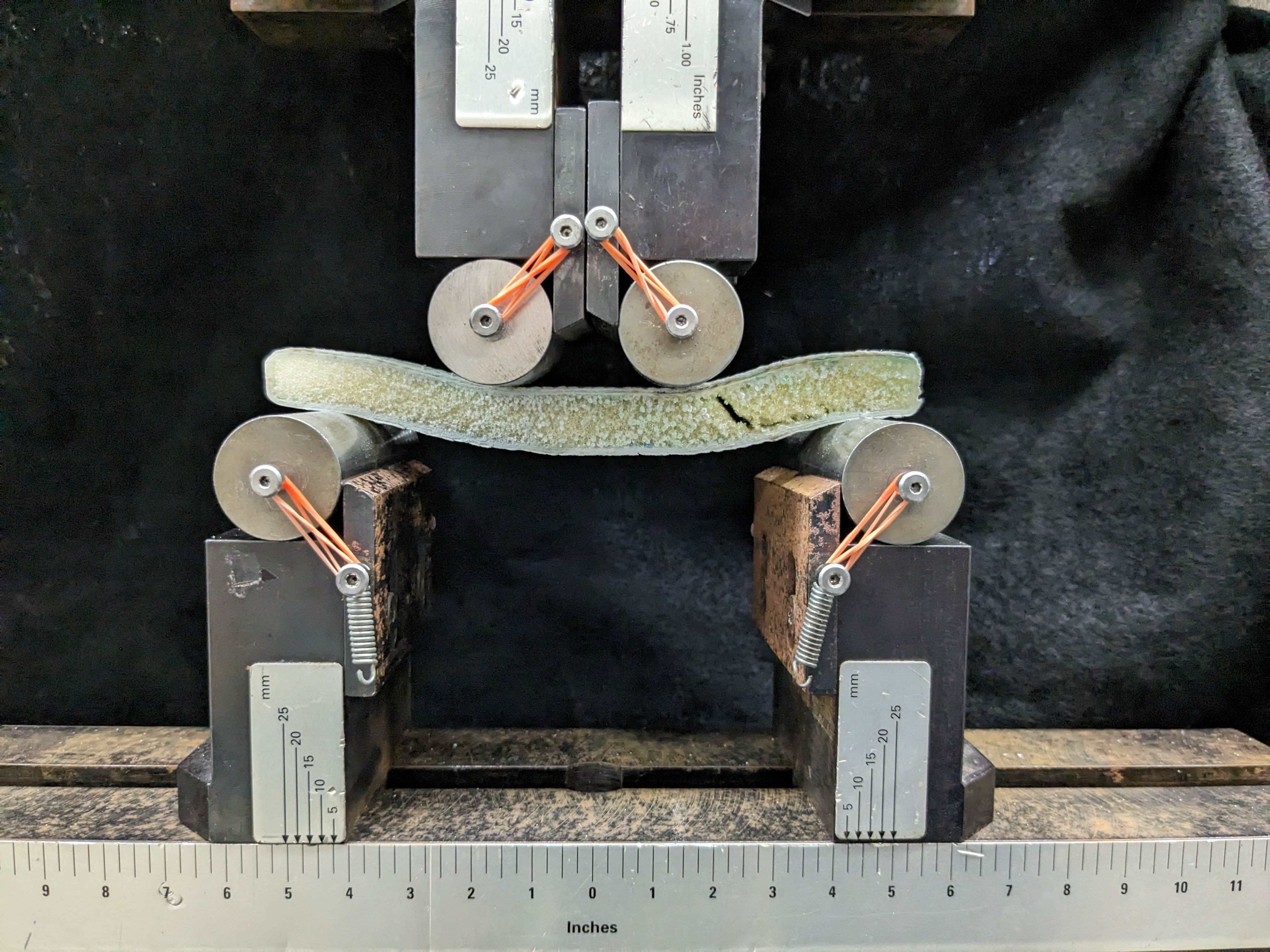 After curing, the samples were cut up into "french fry" samples and broken in an MTS load frame. Seen here is one such test.