Fencing Lamé Tester
Project Overview
Designed and machined a low-cost conductive probe for testing electrical
resistance of fencing lamé jackets. Intended as an affordable alternative
to $60-$150 commercial probes while maintaining compliance with FIE testing geometry.
Design Requirements
| Requirement | Target | Rationale |
|---|---|---|
| Tip geometry | 4 mm hemispherical radius | FIE m.28.5 specification |
| Electrical resistance | < 5 Ω across lamé | International competition standard |
| Weight | 175 g (target) | Club-use alternative to 500 g official weight |
| Connection | Standard banana plug interface | Compatibility with multimeters |
| Cost | < Commercial alternatives | Accessibility for clubs / home use |
Key Considerations & Trade-offs
- 500 g (FIE standard) vs reduced mass: Full compliance increases size and material cost; 175 g sufficient for club diagnostics.
- Aluminum vs Stainless Steel: Steel improves mass and durability but increases machining time and cost.
- Fixed connector vs threaded insert: Direct press-fit reduces parts but decreases long-term durability.
- Ergonomics vs mass target: Increasing height raises weight but compromises usability.
Down-Selection Rationale
- Selected 6061 aluminum for machinability, cost, and adequate electrical conductivity.
- Accepted reduced 175 g mass for non-competition use to avoid excessive height increase.
- Designed 4 mm hemispherical tip to maintain geometric compliance with FIE rule m.28.5.
- Implemented threaded M6 banana plug interface to improve serviceability and longevity.
- Used stock diameter (1.5 in) to reduce material waste and simplify turning operations.
Build, Manufacturing & Validation
- Modeled in SolidWorks with controlled mass properties to hit 175 g target.
- Machined using CNC + manual lathe in COE machine shop.
- Hemispherical tip formed and finished to maintain consistent contact surface.
- Manually tapped threaded interface for replaceable banana connector.
- Validated by measuring resistance across multiple lamé jackets using multimeter and alligator clip.
- Confirmed consistent contact and resistance measurements during sliding contact testing.
Image Gallery
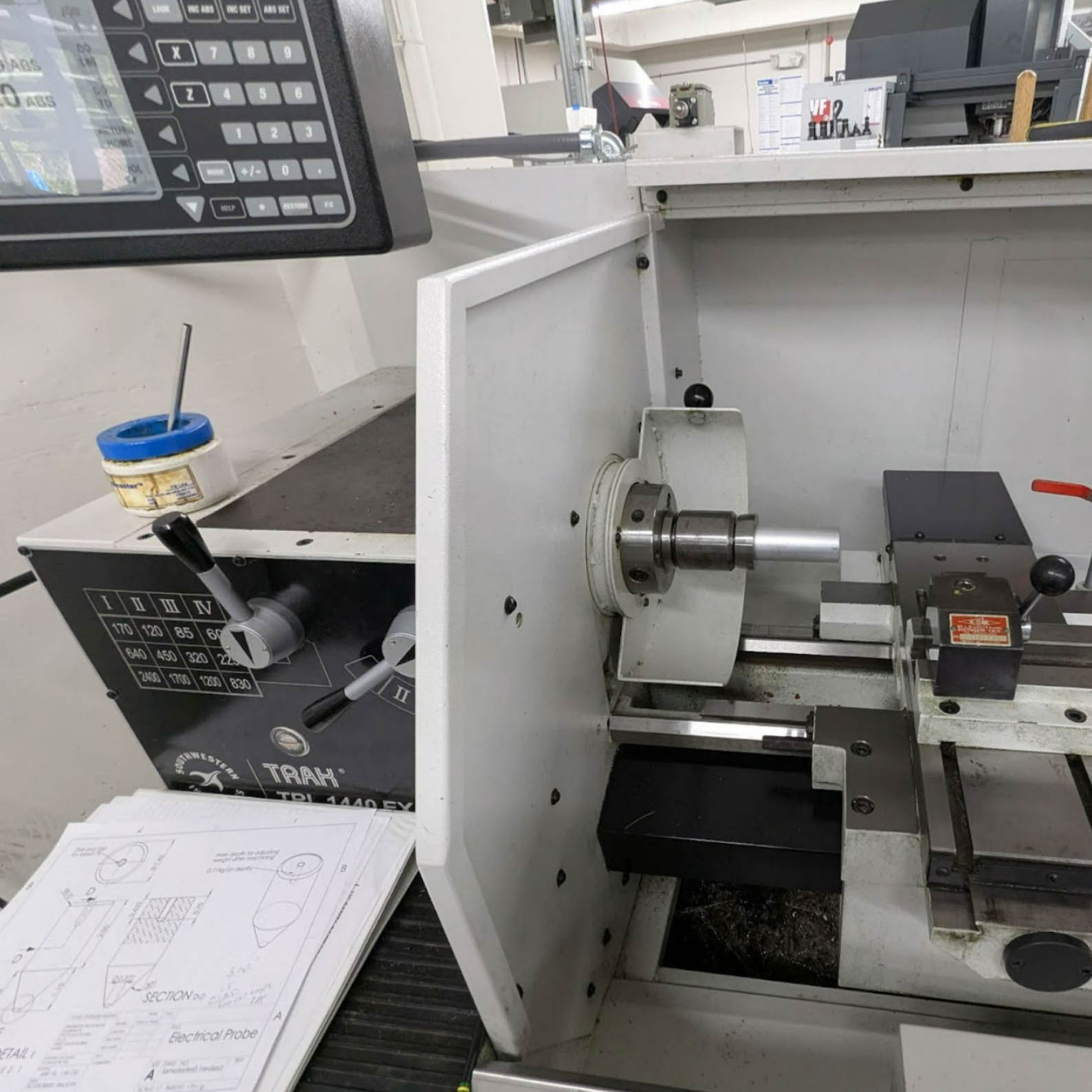 After getting approval from the machine shop manager for my part drawing, he helped me write a program on a CNC lathe to make the part.
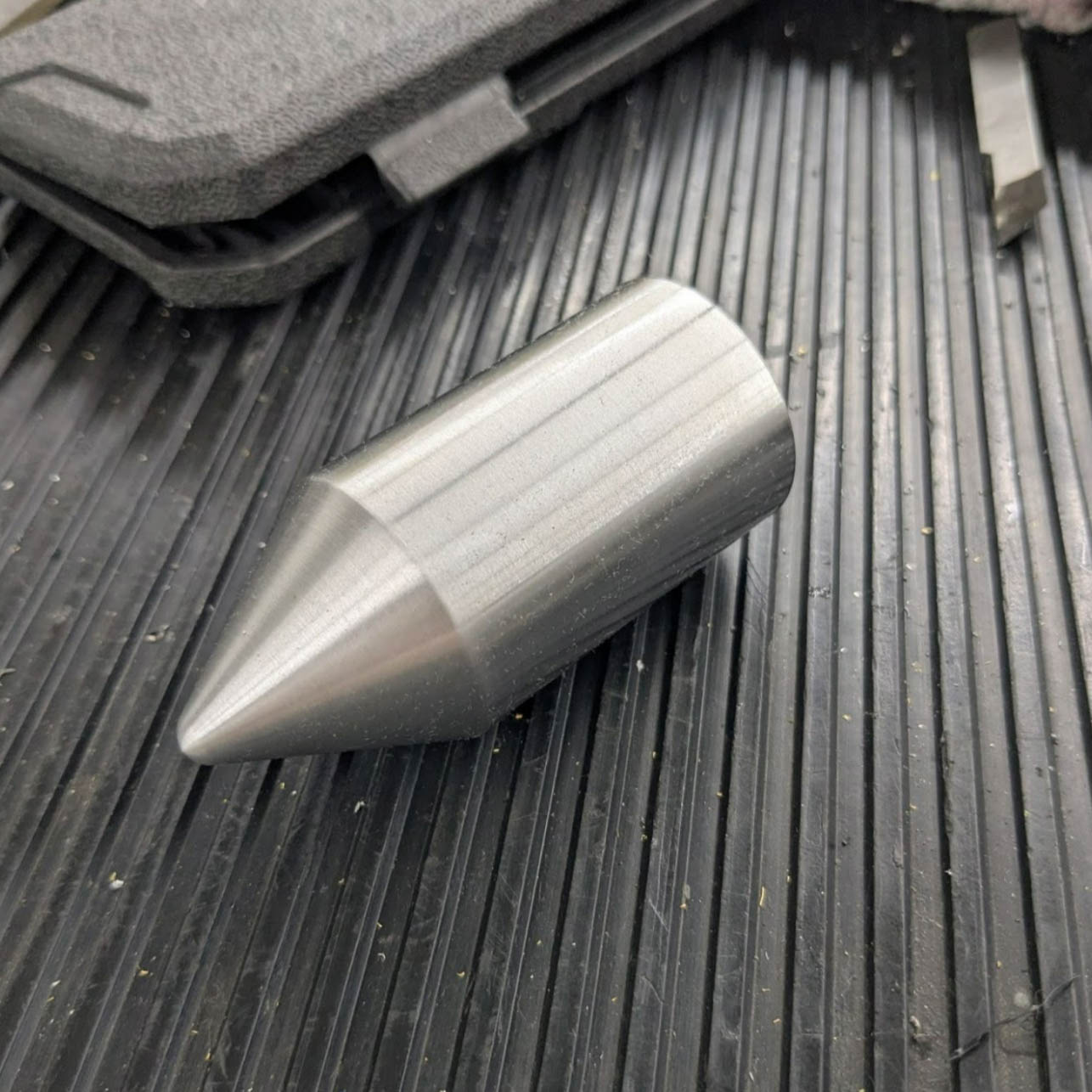 This was the part after the completed job on the CNC lathe. I used Scotch-Brite to get the smooth surface finish.
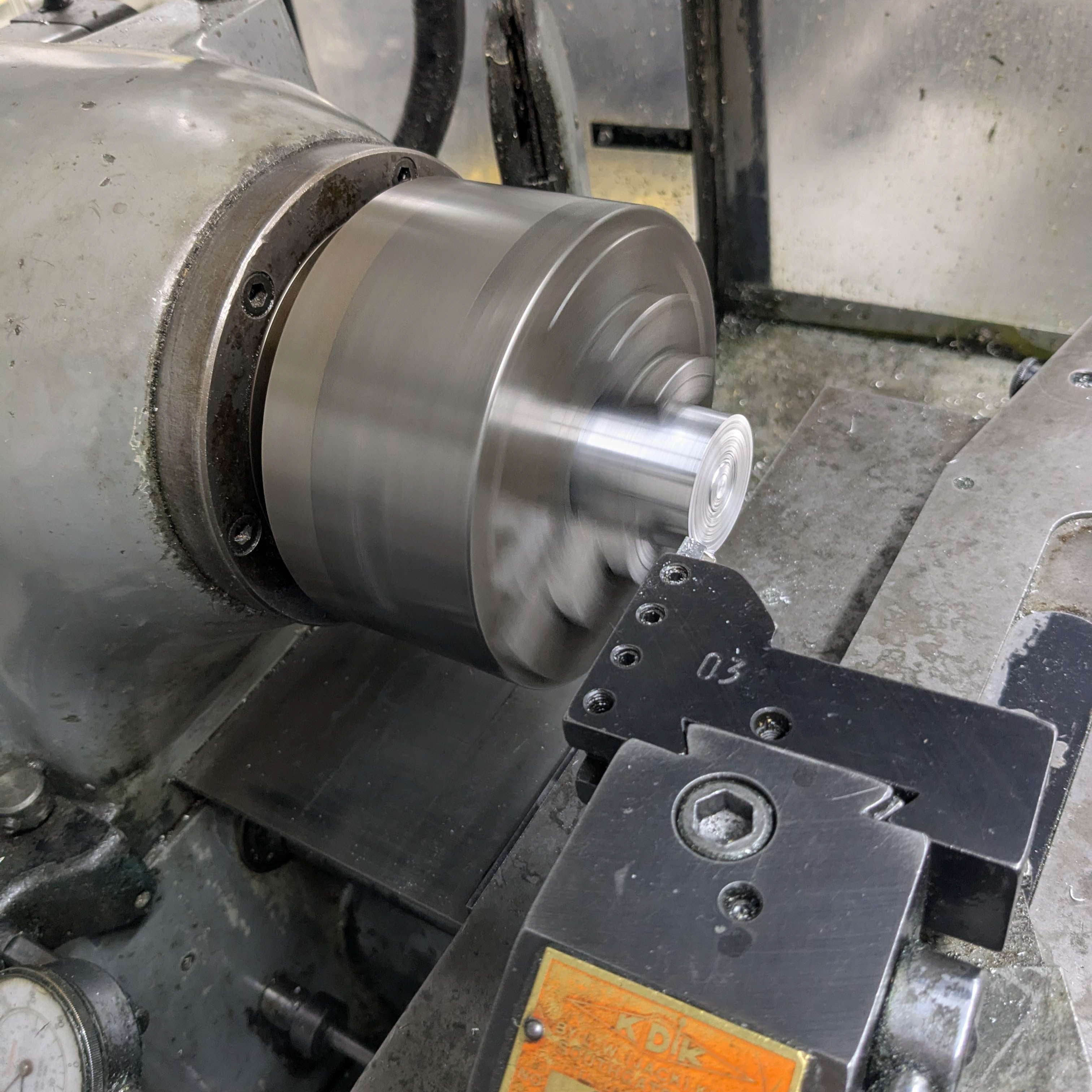 I finished the part on a manual lathe, where I faced the back side and drilled the hole for the banana socket. After that I manually tapped the hole.
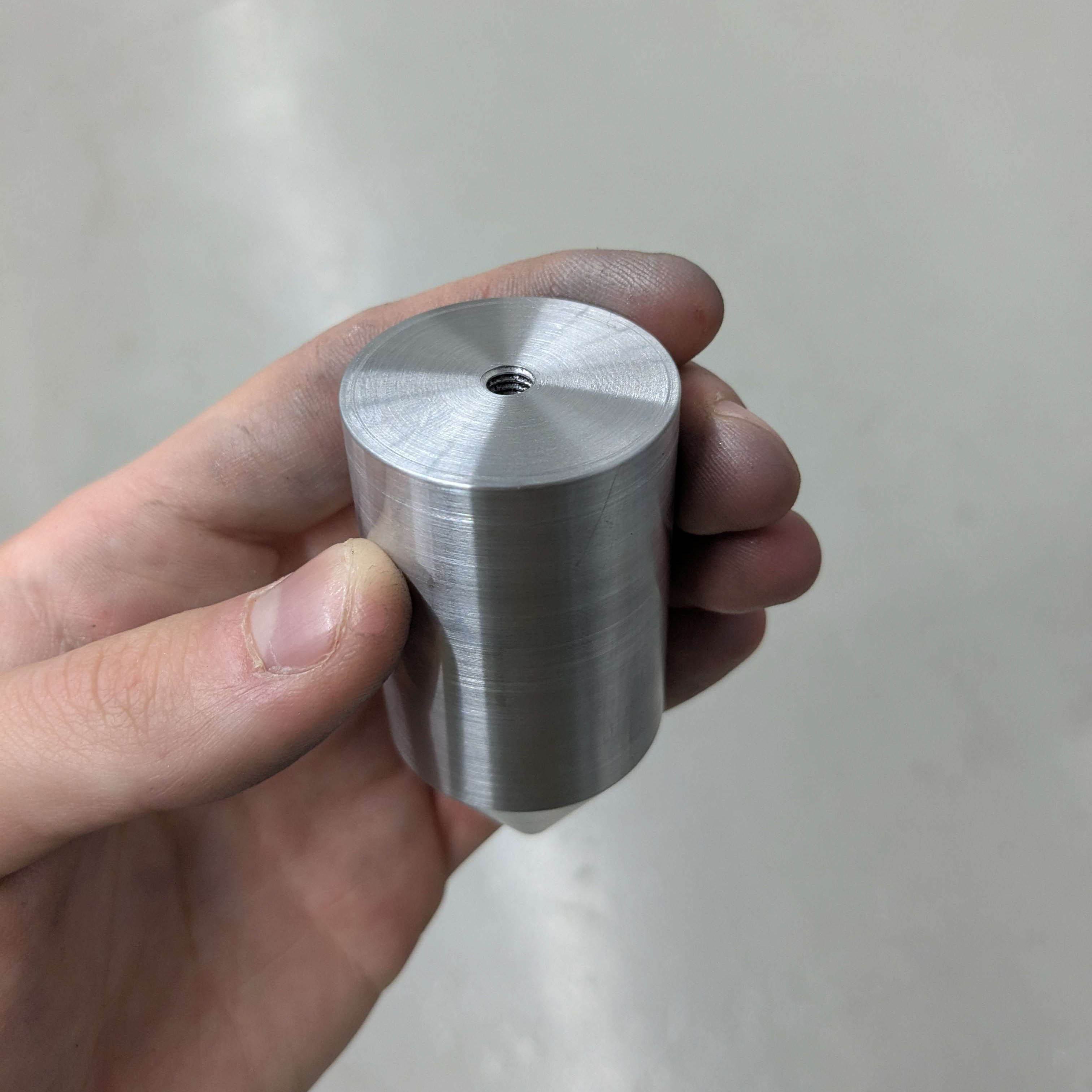 This is the finished tester with the drilled and tapped hole.
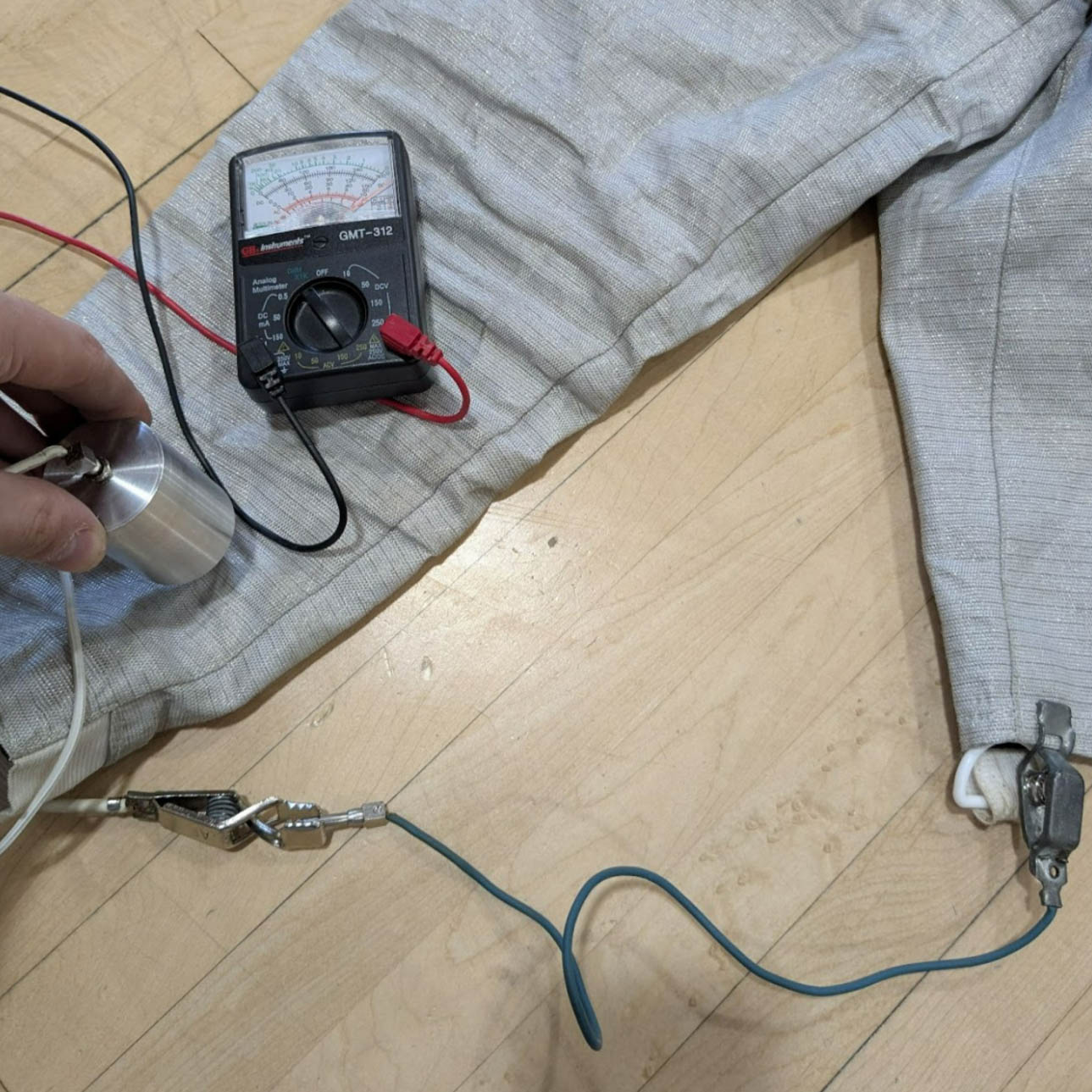 The probe was used to test fencing jackets at the UCSB Fencing Club. From 40 total jackets, 25 were found to be not suitable for competition, and 15 were found to be good
for competition. The state of the jackets was also verified by historical use and observation: jackets that failed the probe test also did not register hits in practice, and had visible corrosion in
areas that failed testing. Additionally, using the probe revealed jackets that had a resistance higher than 5 Ohms, but seemed to work in practice.
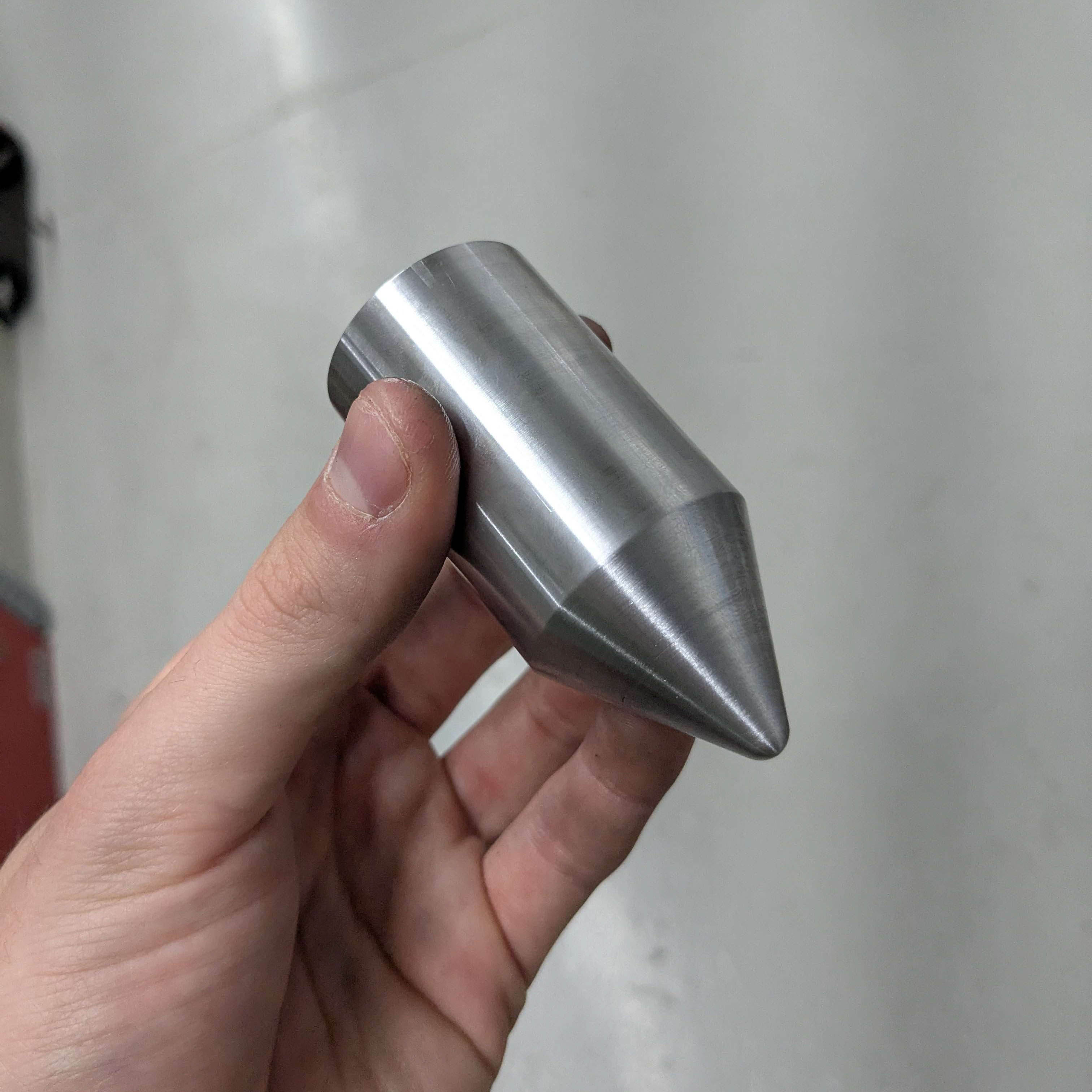 I'm super happy with the result of this project. Not only was I able to make something cool, I also learned a lot about GDT, how to use a CNC Lathe, and I got to help
my fencing club. Commerical testers can go for upwards of $60, and the product I ended up making cost roughly $6 by weight. Even the cost of the stock was $21, which was a third of the price of a
commercial tester.