Automatic Bike Shifter
Project Details / Background
This was a "junior design" class project, for which my group and I received $150 to design and fabricate a mechanism to automatically
shift bicycle gears based on the speed of the bike. We utilized the existing derailleur and bottle cage mount to make this design generalizable to all bikes,
and used an Arduino Micro to control the system. The mount for the mechanism was 3D printed out of PLA.
I initially came up with the idea for the project, and
we selected it because of its practicality and feasibility; also because we could add on to it if we had the time. Once we started making prototypes, my first big
contribution was moving and redesigning the mount for electronics and the motor to fit the bottle cage mount of our bike. The reasoning behind this was the standard
spacing of the screw holes would allow us to attach our prototype easily to our test bike, and to any bike in general.
After that, I designed a circuit for all of our electrical components, built breadboard circuits to test our prototypes, and designed a custom PCB to be made by Dr. Trevor Marks,
a lecturer and mentor in the Mechanical Engineering Department. Admittedly I broke our first PCB, so I worked with Dr. Marks to redesign it so that all the traces were on
just one side of the PCB for simpler soldering. Finally, I designed and made the laser-cut housing for buttons that would go on the handlebars of the bike.
Below are pictures from over the course of the project.
Image Gallery
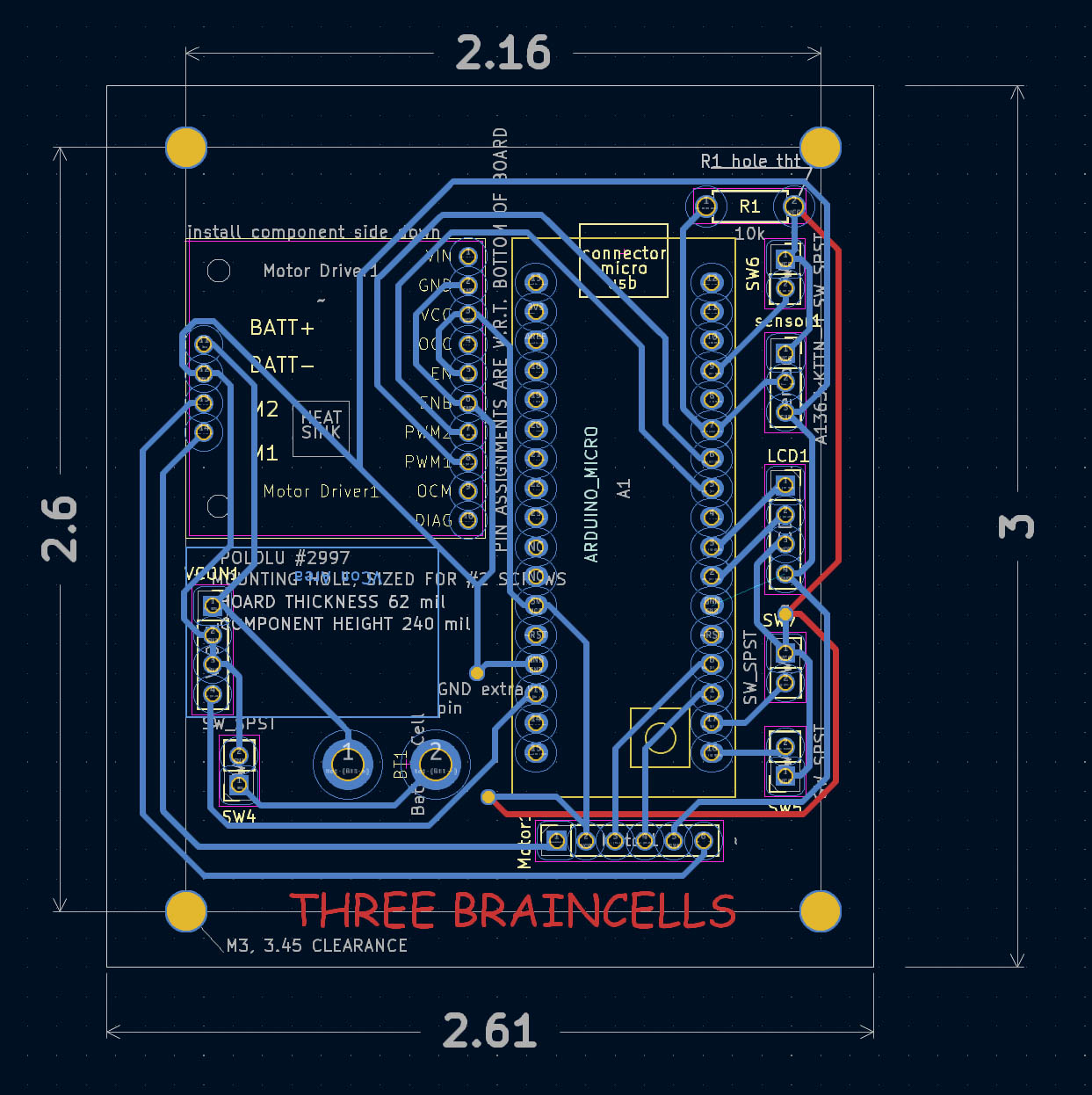 This is the final PCB design. Given the limitations of the available PCB manufacturing tools, the design was adjusted to place all components on the back-side of the board,
with only a few traces on the front.
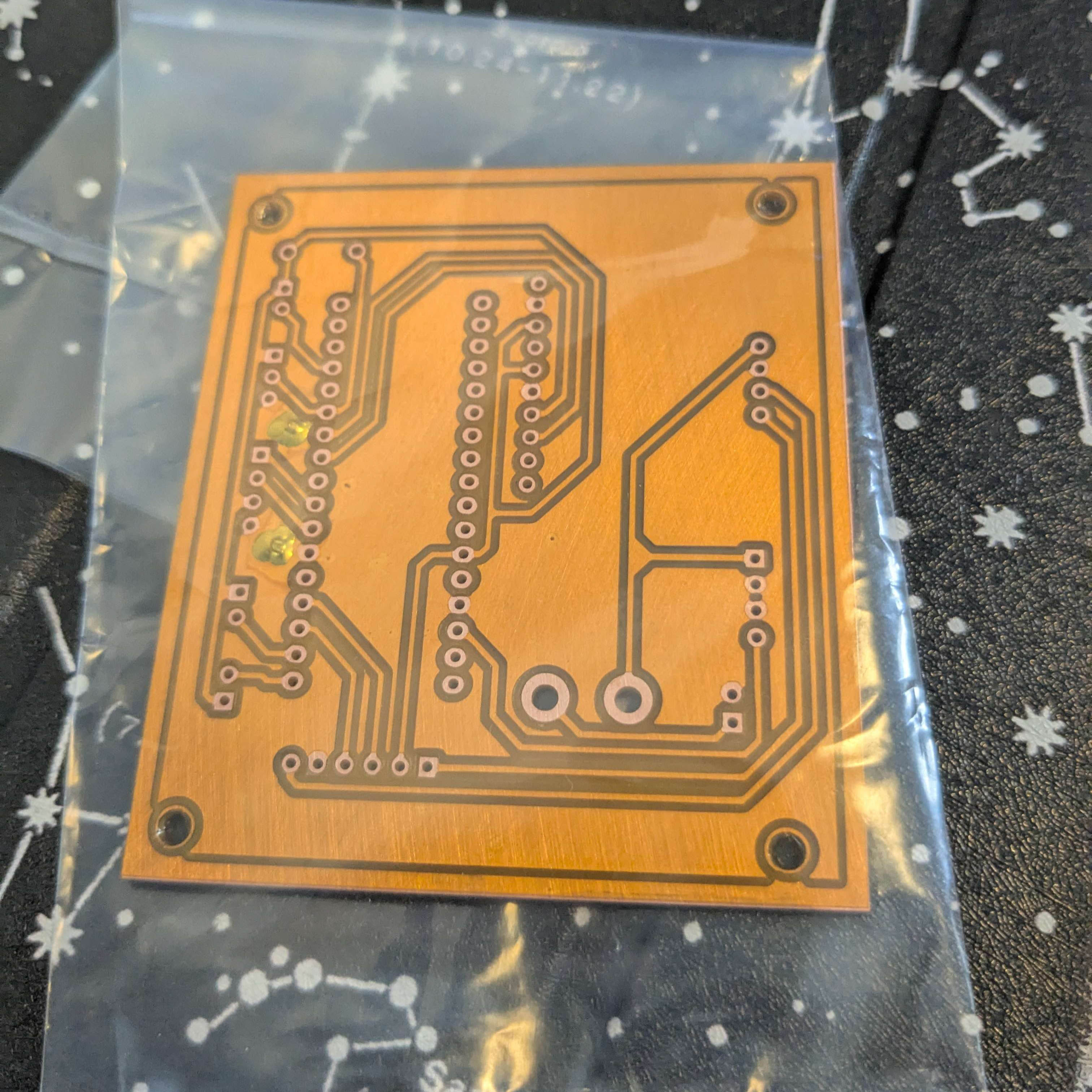 This is the PCB made by Dr. Marks.
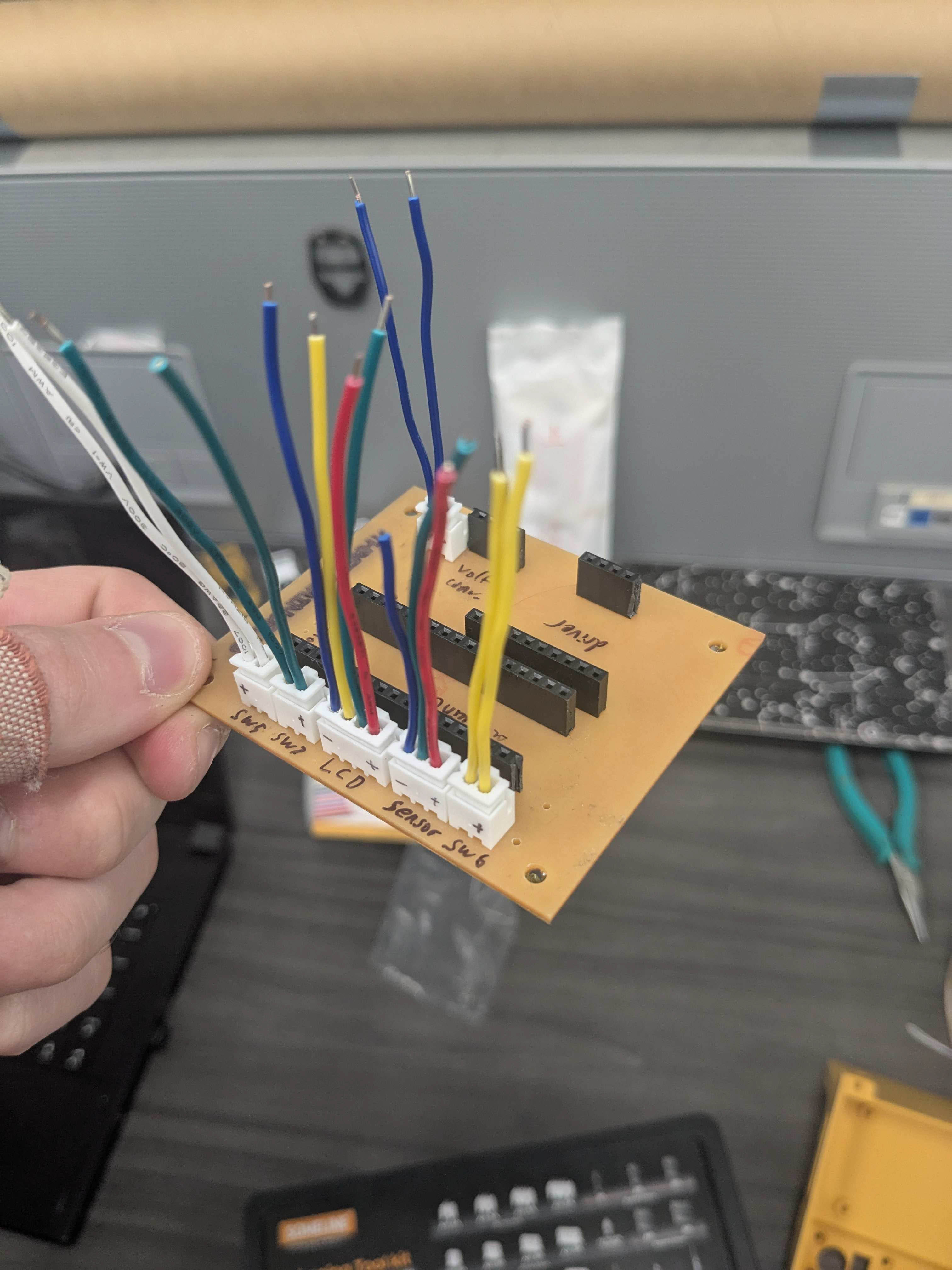 I soldered all the necessary header pins and JST connectors to the board. We used JST connectors for sensors and switches because it would allow for more convenient removal
of high-risk components while maintaining a solid connection.
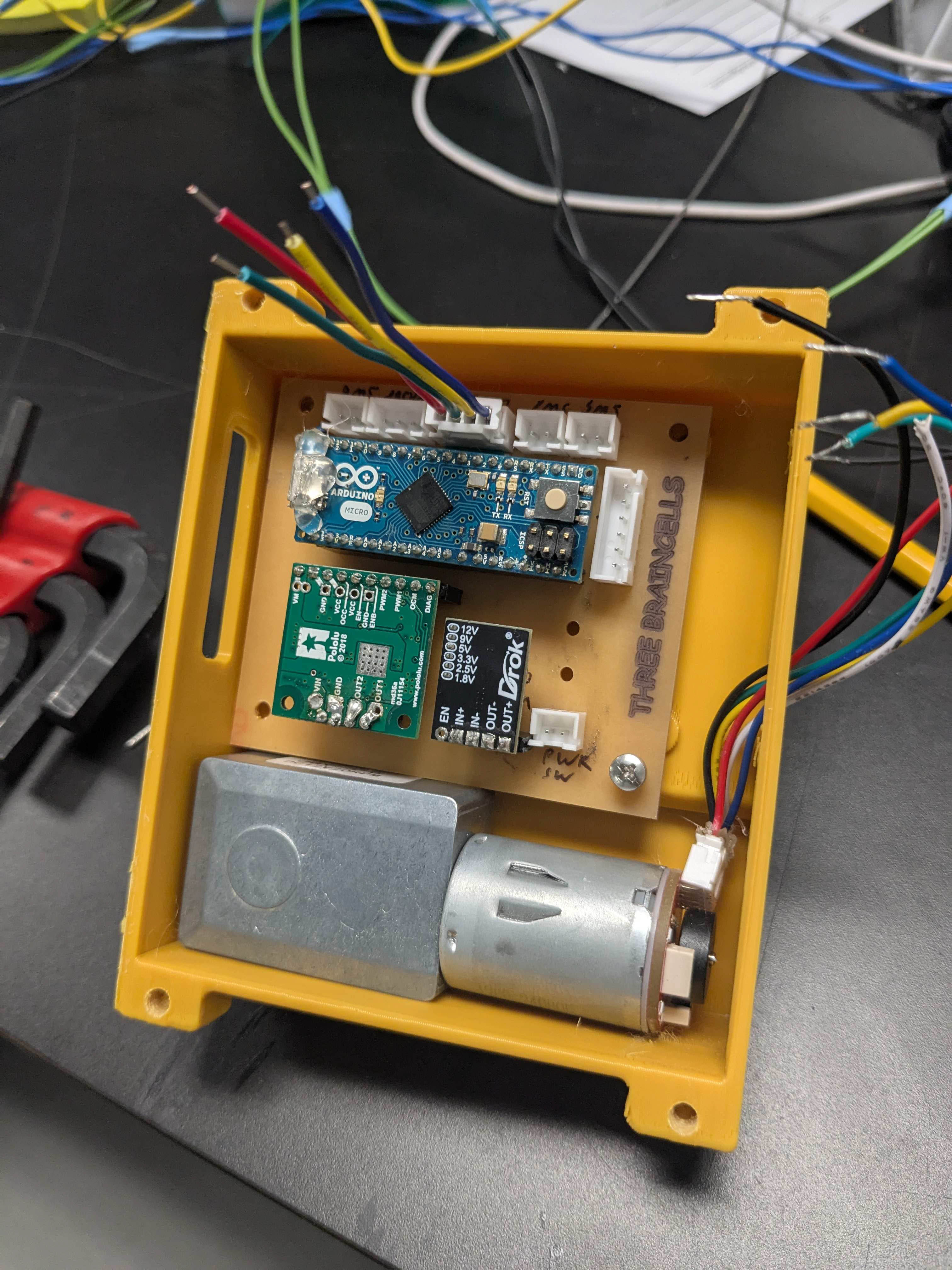 This is a test fit of all components in the housing.
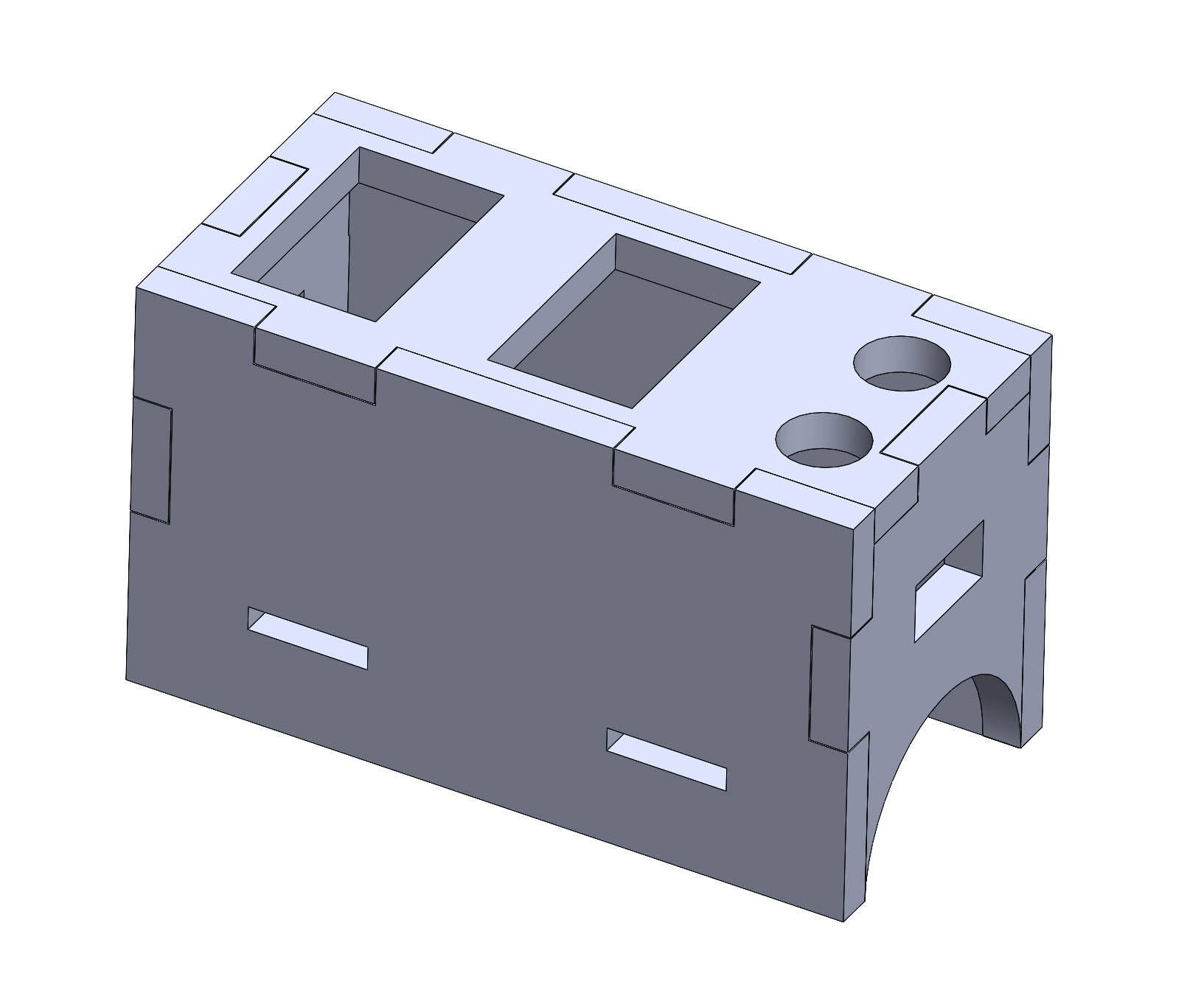 I designed the UI housing in Solidworks using the sheet metal tab-and-slot feature, and laser-cut it out of 1/8 inch wood sheets. It mounted to the handlebars of our
bike with zip ties, and proved to be very ergonomic to use.
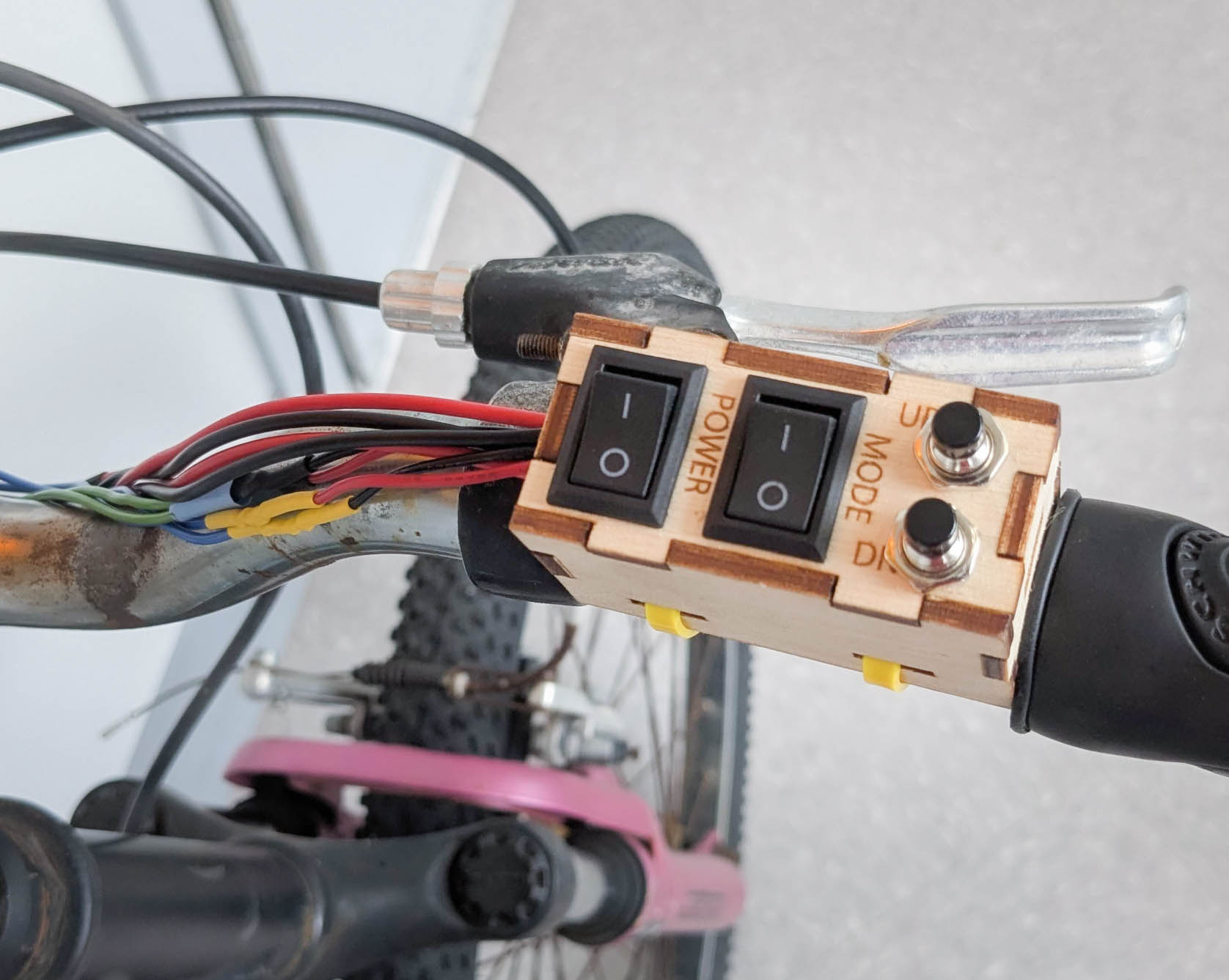 The UI had four inputs: power, mode, shift up, and shift down. The mode switch changed the function of the shifter between manual, where the user could change gears
independently, and automatic, where the Arduino would control gear selection.