Automatic Chessboard
This is a work in progress with more updates to come in the future!
Project Details / Background
The goal of this project is to make a chess board which will move pieces autonomously in response to voice commands and physical inputs. One of the problems the automatic chessboard
will address is the obstacles that players with physical disabilities face at chess competitions. In this scenario, players have to interact with chess pieces in a timed environment, which can be
difficult for those with motor disorders. By allowing players to make moves by using their voice, instead of relying on a human buffer, all parties involved achieve a smoother gaming experience.
Research combined in-person and online interviews, competitive product analysis, patent review, and technical literature to define the direction of an automatic chessboard. Feedback
from UCSB's Chess and Robotics Clubs, along with Chess.com coordinators, shaped key product needs, technical features, and target applications. Researching existing products like Chessup and Chessnut
helped benchmark functionality and market positioning.
Based on these insights, three core concepts were prototyped: moving pieces with an electromagnet and permanent magnet, piece detection and identification with RFID hardware and Hall
Effect sensors, and preliminary piece design.
Testing showed that both permanent magnets and electromagnets can reliably move pieces, Hall effect sensors outperform RFID for identification, and viable design parameters for chess pieces were
established. These results informed a development roadmap focused on building a full gantry system, developing control software, and integrating all subsystems into a functional prototype.
Below are images from over the course of the project as of the time of writing.
Image Gallery
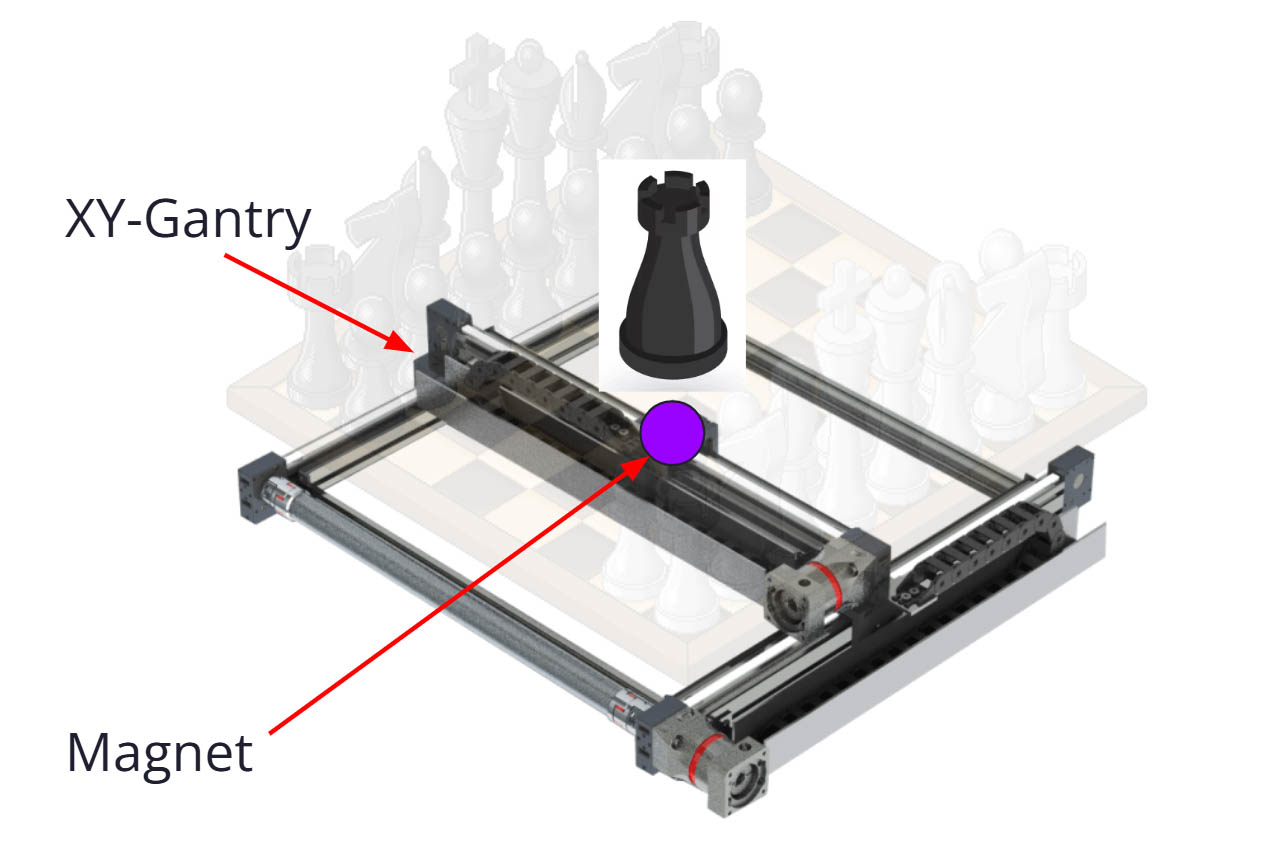 This is roughly what the gantry under the board will look like. The toolhead will have a magnet that will attract and pull pieces across the board.
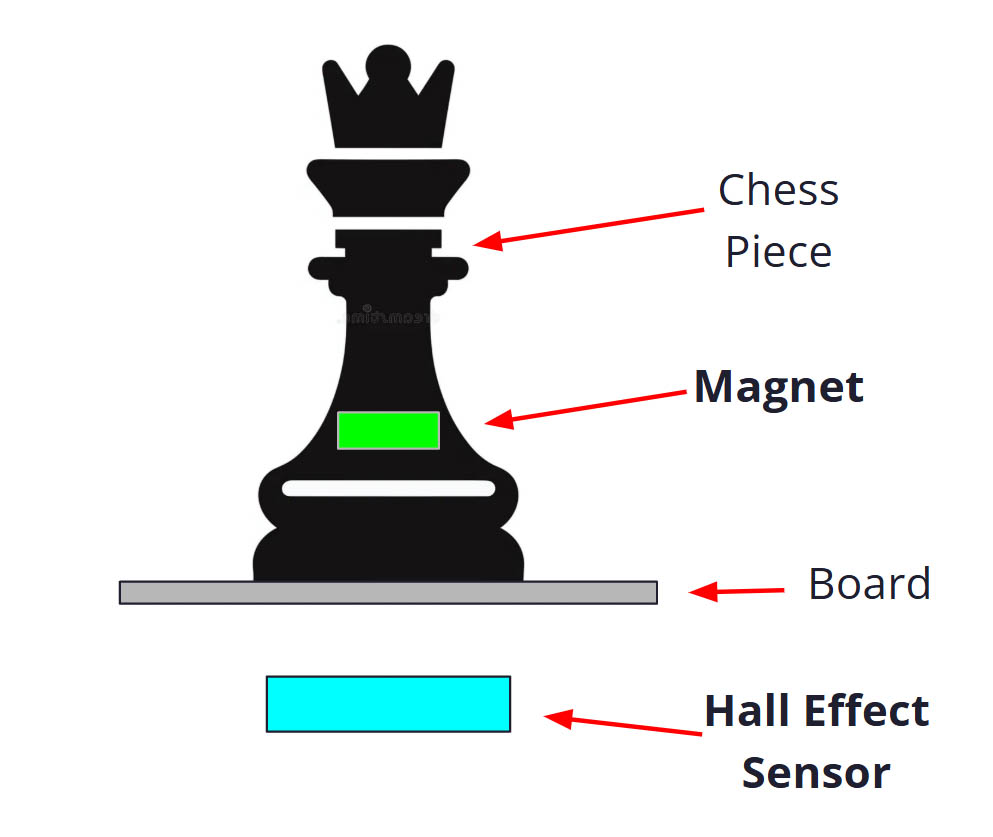 This is what the cross section of a chess piece will look like. There will be a magnet in the piece which will be detected by a Hall Effect sensor under the board.
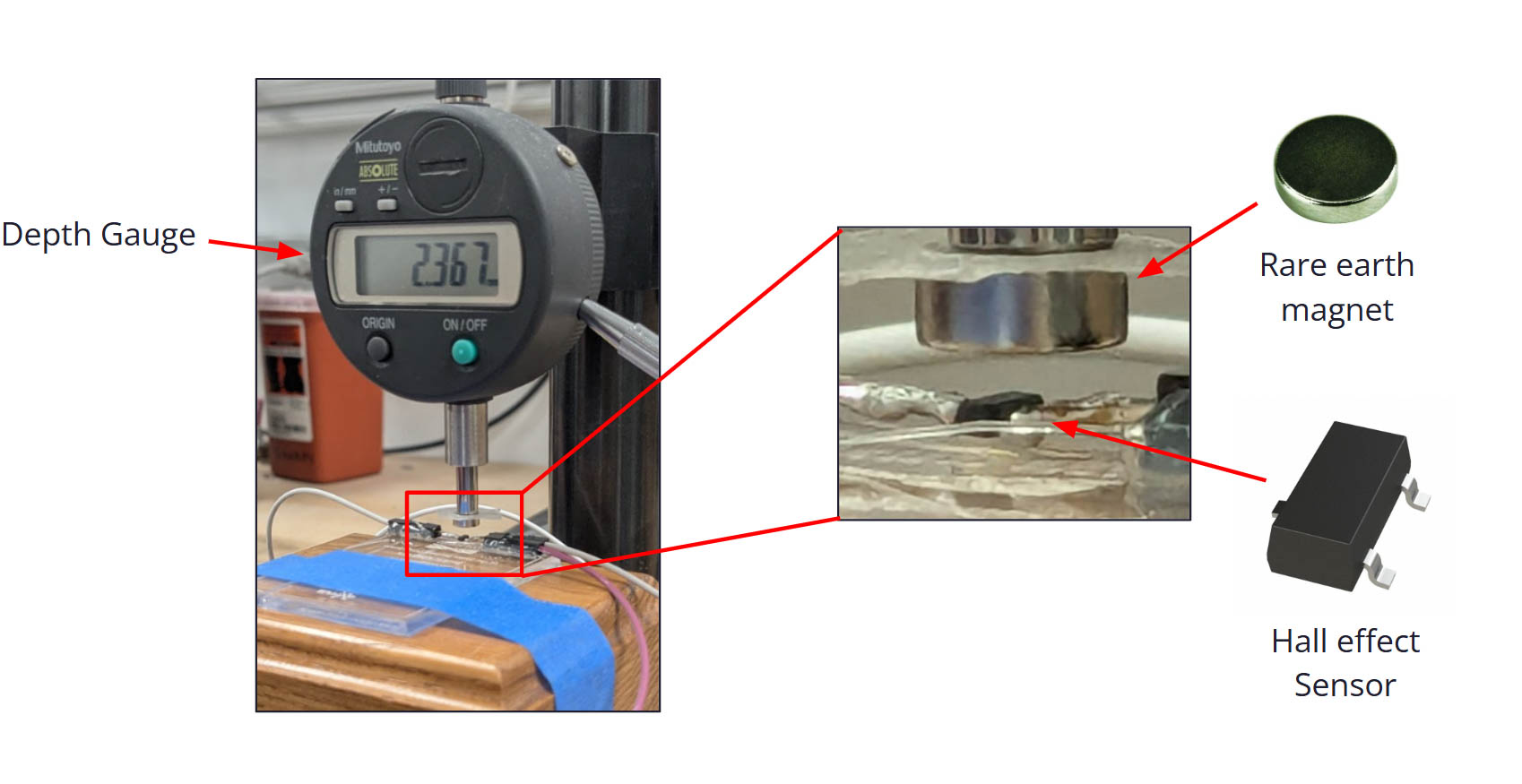 This was our test setup for the hall effect sensors. By varying the height of the magnet above the sensor and measuring its ouput using an Arduino, we determined that
using Hall Effect sensors is a viable solution to identifying pieces.
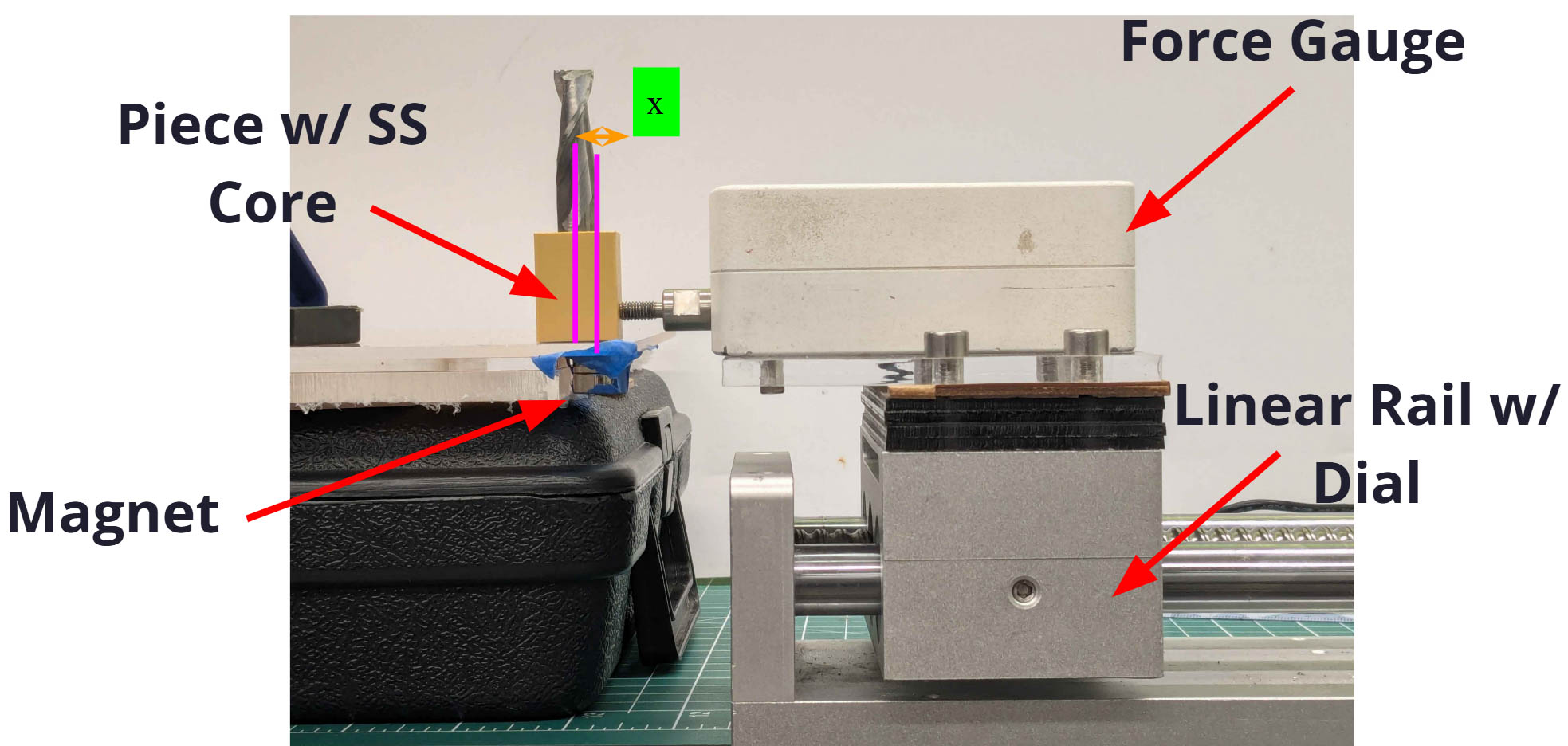 This was our test setup for measuring the force needed to displace a piece using a permanent magnet. This helped inform us on what size and strength of magnet we would need
to reliably move pieces.